When I tell people how much our wedding cost, I usually get one of two reactions: Either they don’t believe me. Or they immediately want to know every single detail 😀 So here it is. Everything we did — and why it actually made our wedding better, not cheaper-feeling.
We had a minimalist German countyside wedding with 157 guests. A live band. A photographer. A decorated venue. A custom wedding cake. Flowers everywhere. And a full midnight buffet.
Our total costs: just slightly over €10,000. The average German wedding costs between €15,000 and €20,000. The average American wedding runs around $30,000 — for roughly 100 people. We paid less than half of that, for more people!
I know €10,000 is still real money. But I want to be clear: this was not a “cheap” wedding. It felt like the most beautiful, personal, meaningful day of our lives. But we were just not willing to go into debt for ONE single And nobody left thinking we’d cut corners.
So I wrote down how we did it. If you are more the audio-visual person: Here is also my YouTube video about this topic.
The venue: we used our barn
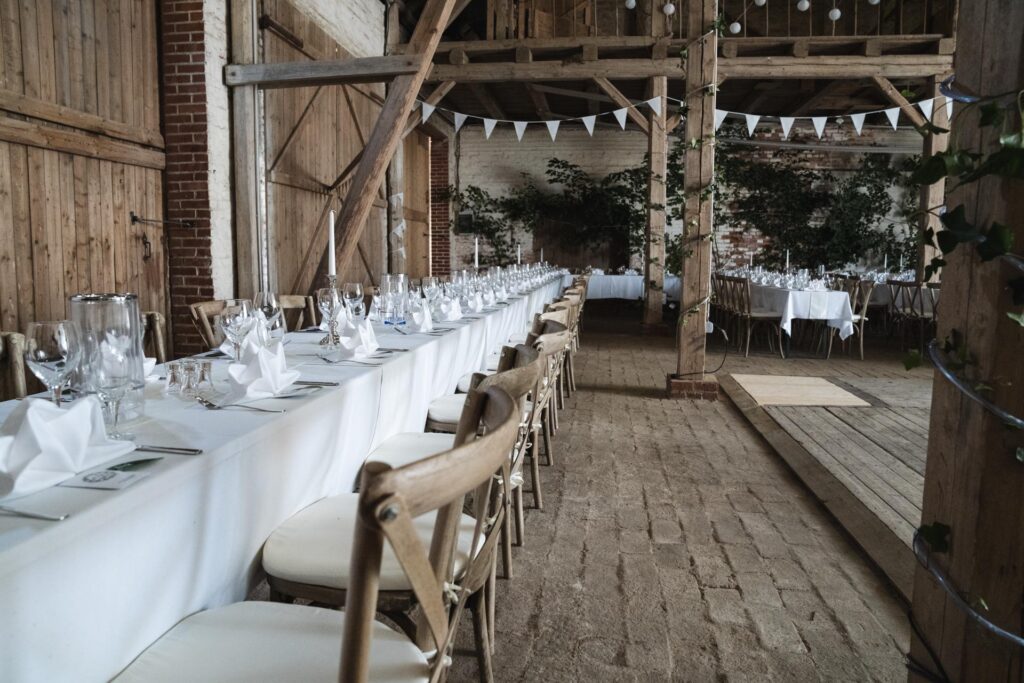
Venue rental in Germany can easily cost €3,000–€5,000 before you’ve even bought a single candle, in the US even more. We are very fortunate to own an old farm in Germany, so we used the barn on our property instead.
I know not everyone has a barn. But the principle works anywhere — a big backyard with a rented tent, a community hall, a state park, maybe friends have a wonderful location you can rent for cheaper. And Outdoor spaces are wildly underrated for weddings! They don’t need to be fancy. They just need to feel like you.
The cheap wedding car: a tractor
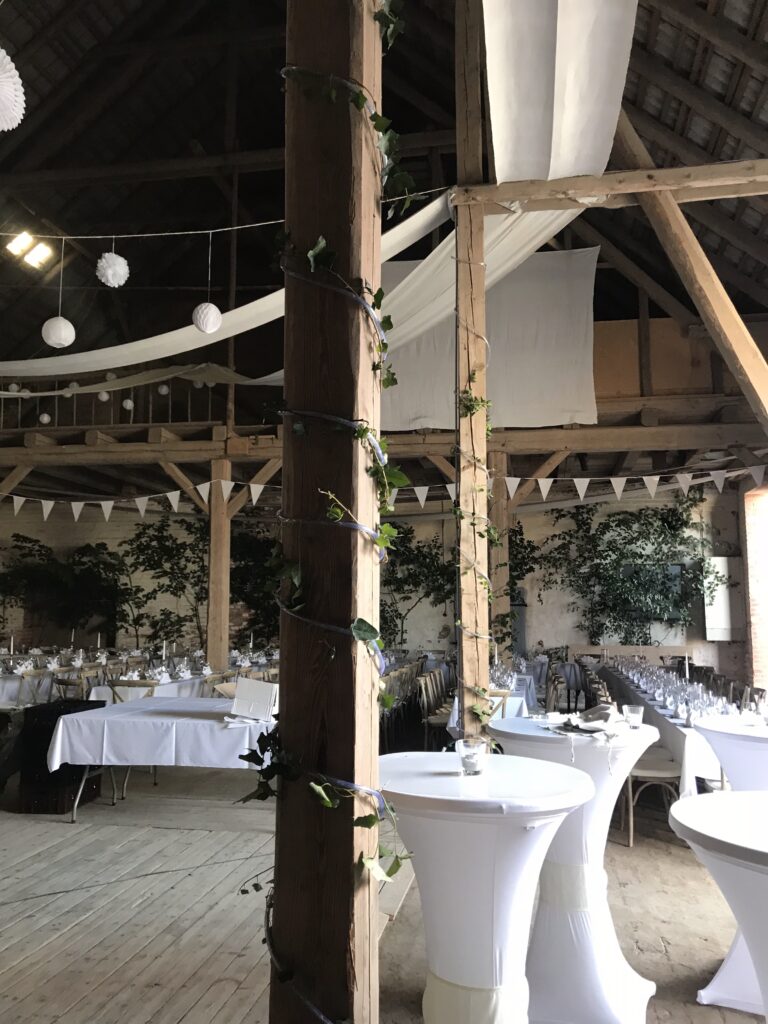
Most couples rent a limousine they sit in for maybe 20 minutes. We decorated our family tractor with flowers and lace and drove from the church to the venue on that.
People went absolutely wild for it. So many photos. So much laughter. It worked perfectly because it was us — at that time lived on our farm in the countryside, and it felt authentic instead of performative.
Some friends of ours came to their own wedding on mountain bikes because they’re both obsessed with cycling. It worked just as well. The transport doesn’t have to impress anyone. It just has to fit your story.
The flowers: the forest
Florists will charge you thousands for arrangements that are dead within three days and shred your budget. We walked into the woods instead and became our own florists.
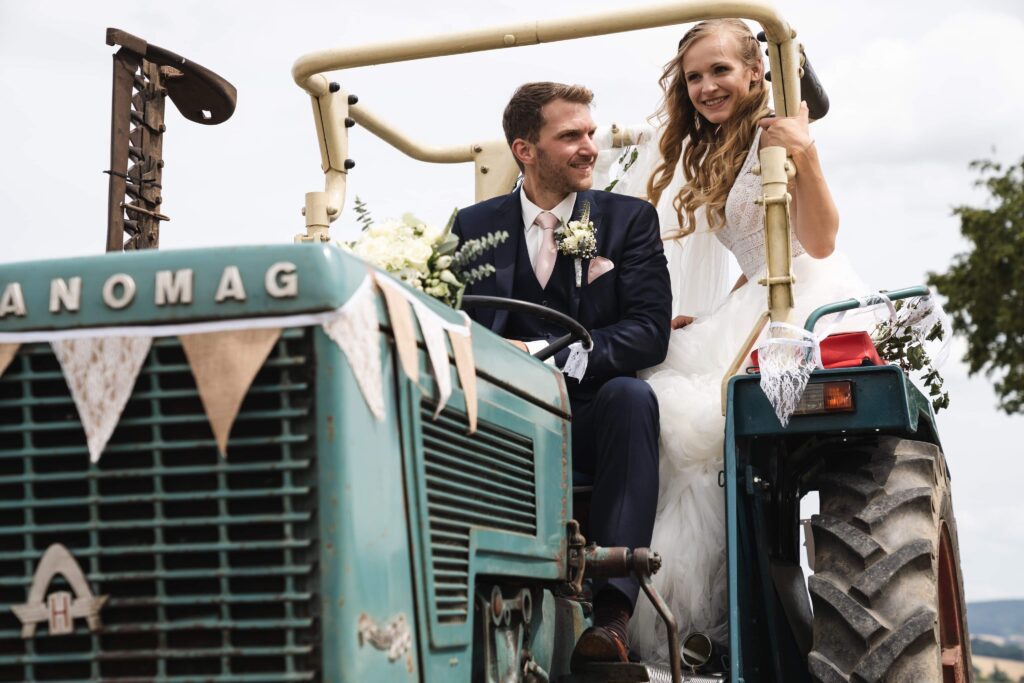
We hung branches along the sides of the barn — lit from underneath, they looked incredible. We collected ivy and draped it around the beams. We used cherry laurel leaves as name tags on the tables instead of buying printed ones.
This is called a “greenery wedding”. Look it up on Pinterest. Nature is the best decorator — and it doesn’t send you an invoice 😀
For the church, we weren’t allowed to bring our own decorations, so we did have to buy flowers there. But we split the cost with another couple who was getting married at the same church the same weekend. One conversation saved us a significant chunk. Worth asking.
The handouts: Canva and nice paper
We designed our own church handouts — songs, lyrics, the whole program — ourselves in Canva. Then we printed them on brown kraft paper instead of cheap white copy paper.
It looked beautiful and intentional. And it cost a fraction of what any printing service would have charged.
The midnight buffet: we asked for help
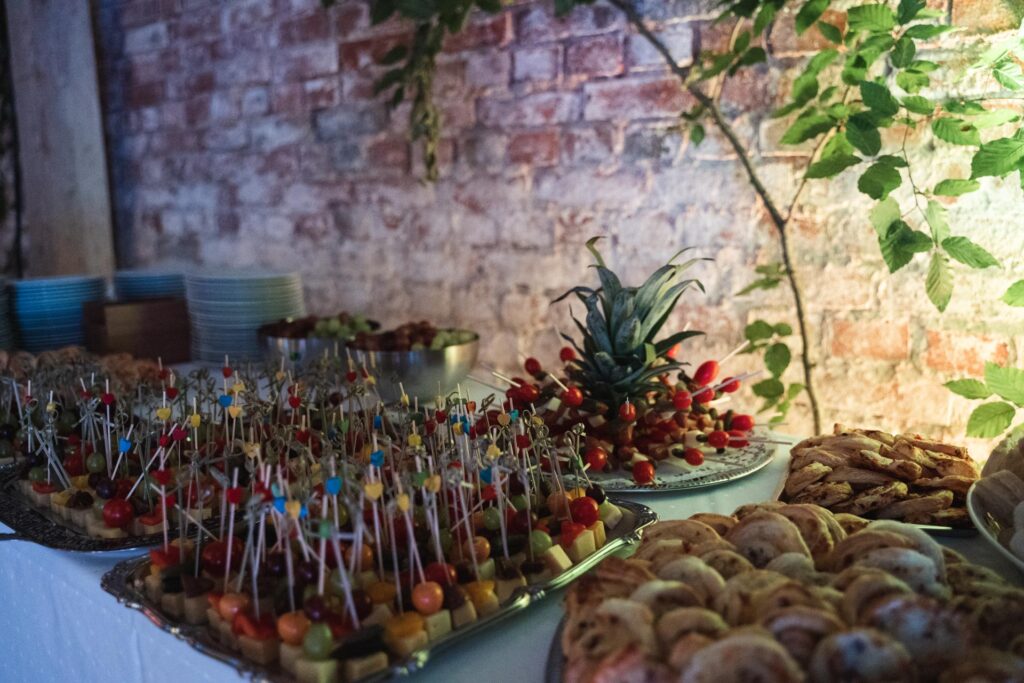
In Germany, a midnight snack at weddings is basically expected. Instead of catering a full spread, we asked our closest friends and family each to bring one dish. We ended up with 15 different dishes, charcuterie boards, and homemade cupcakes.
It looked more personal than any catered buffet I’ve ever seen at a wedding and it cost us nothing. And people genuinely loved being part of it – plus they already had a wedding gift!
The wedding cake: a gift from a friend
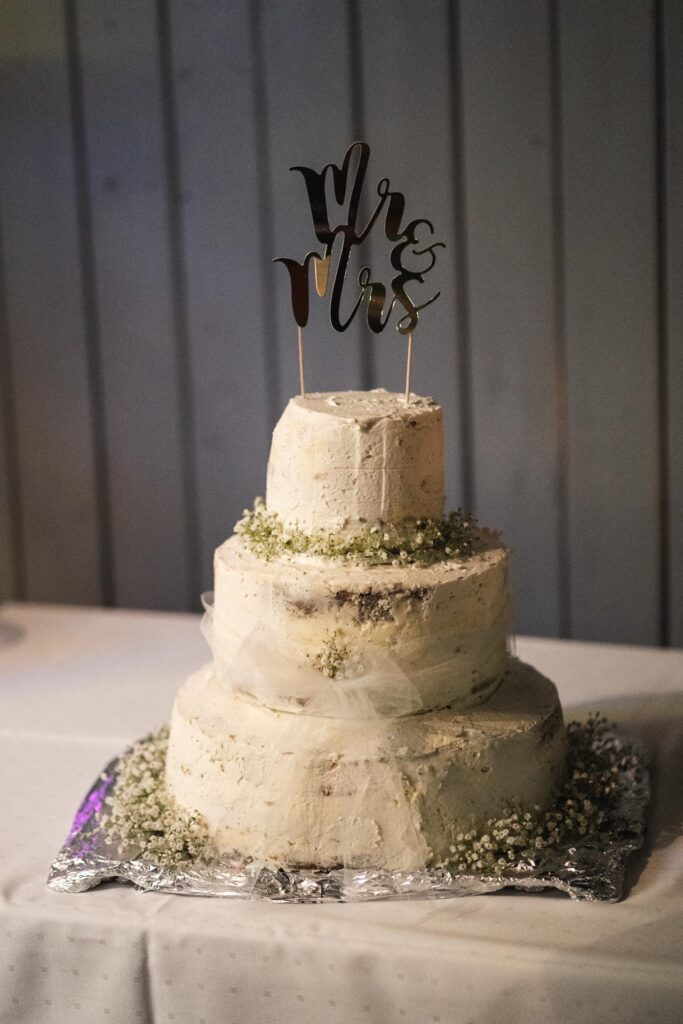
Our wedding cake was made by a close friend who had always wanted to try baking a real one. She offered it as her wedding gift to us. She put more love into that cake than any bakery ever could have. Of course, it was not 100% picture perfect, but for me, it was the best wedding gift we received — not despite the fact that it was homemade, but because one of my friends made it for us!
If you have someone in your life who bakes and would jump at the chance to make a wedding cake — let them. The risk is small. The meaning is huge.
The decorations: borrow first, buy to keep
We borrowed most of our decorations. When we did buy things, we only bought items we knew we’d still use afterward — in our home, for birthday parties, for future celebrations. And we actually still use some of our wedding decorations years later.
And what we didn’t keep, we sold. Wedding items move fast on Facebook Marketplace and eBay Kleinanzeigen. Just make sure before you buy something that there’s actual demand for it secondhand.
I also rented out my wedding dress twice after the wedding — €400 each time, €800 total. The renters cleaned it afterward. And honestly, combining the rental income with what I’ll eventually sell it for, I’ll probably end up paying nothing for the dress at all.
The food: grill buffet instead of a sit-down menu
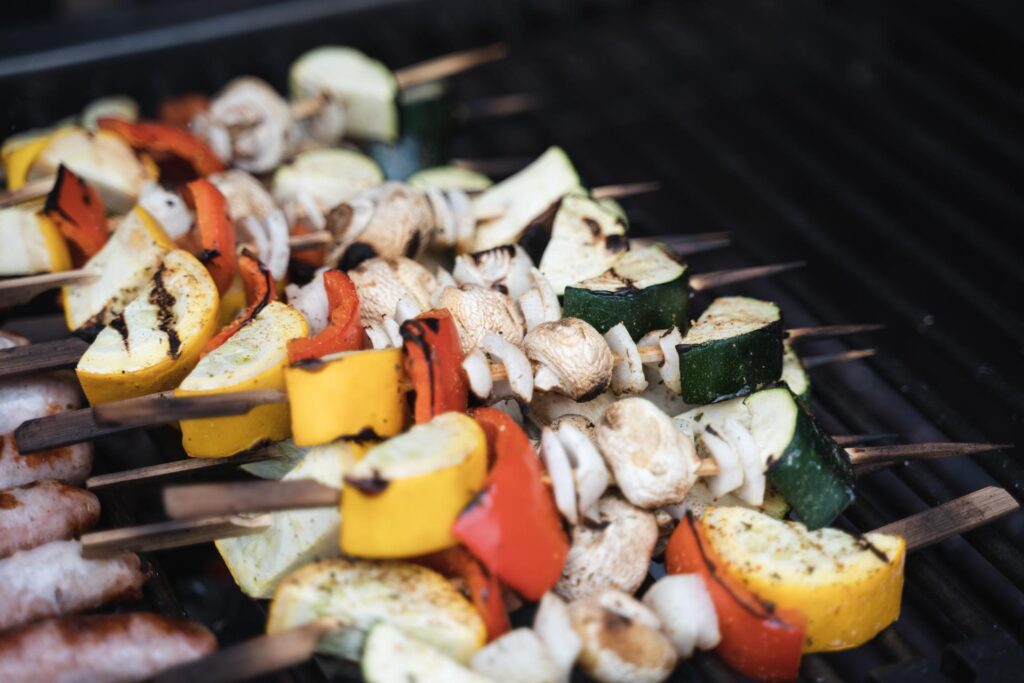
Food and drinks are always the biggest line item at almost every wedding. With 157 guests, we were nervous about this one. But we skipped the multi-course menu with tablecloths and formal waitstaff and did a grill buffet instead.
It was more relaxed, more us, and our guests loved it. Nobody was stiff. Everyone helped themselves and stayed on their feet and talked to each other.
Here’s the thing about weddings: when you think back on the ones you’ve attended, you rarely remember the food. You remember the feeling. The music. The moment when two people you love looked at each other. Whether there was enough food and everyone felt taken care of — that’s what matters.
The drinks: pay for what’s actually consumed
This is probably the single biggest money-saving decision we made.
Instead of agreeing to a flat per-person rate for drinks — which typically includes unlimited beer, wine, and spirits — we negotiated consumption-based billing with our caterer.
We knew our crowd. A lot of our guests don’t drink much, or don’t drink alcohol at all. Why would we pay a flat rate that assumes everyone’s drinking all night?
We asked. They agreed. And we saved enormously.
Always ask your caterer about consumption-based billing. Most will offer it if you actually bring it up.
Saving for a wedding or just want to get your own budget under control first? Then check out my Annual / Monthly Budget Planner Spreadsheet!

The photographer: offer something in exchange
We found our photographers — a married couple just starting to build their wedding portfolio — through a local Facebook group. We gave them full rights to use our photos for their marketing. In exchange, they gave us an incredible price, because they were still practicing photographing weddings.
If your wedding has something visually special — a unique private venue, a meaningful detail, an interesting aesthetic — mention it. A photographer who wants beautiful portfolio shots may be willing to work with you on price.
The wedding favors: seeds from our garden
I never really kept any wedding favor I’ve ever been given. I don’t think most people do.
So instead of buying little trinkets, we harvested seeds from the flowers in our yard and packed them into small bags. Each guest took home seeds they could plant.
Months later — even a year later — I still get photos from people showing me their flower gardens. It cost around €50 for 150 people. And the effect was bigger than any purchased favor could have been.
The gifts: we asked for money
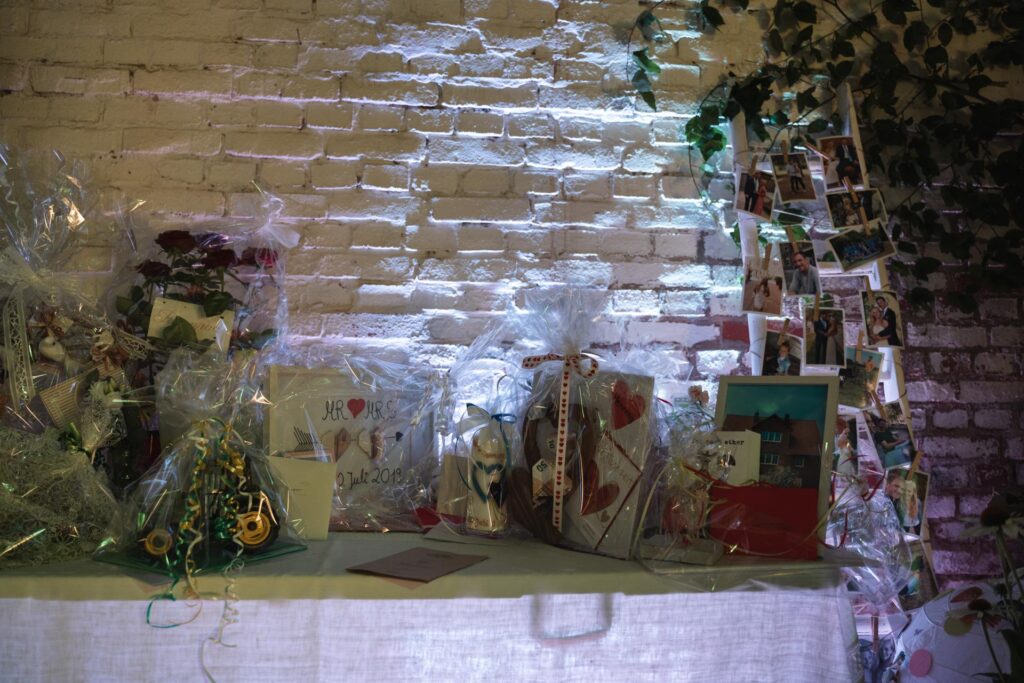
In Germany, asking for money as a wedding gift instead of physical presents is completely normal. We were upfront about it in our invitations. Our guests actually appreciated it — no list to check, nothing to order in advance, no guessing about what we’d like.
We received around €6,000–€7,000 in cash gifts, which covered a big part of our total costs. And people got creative about how they wrapped or presented the money, which made it genuinely fun to open.
The rings: inherited pieces
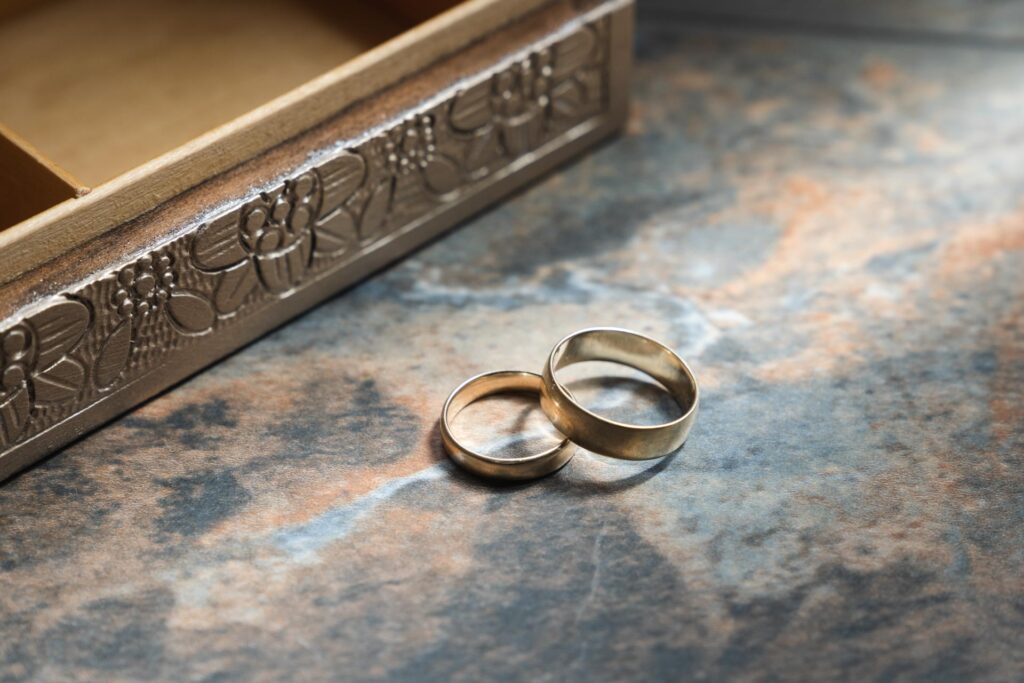
Most couples in Germany spend €2,000–€3,000 on wedding rings. Ours belonged to our parents and grandparents. We had them professionally resized, engraved, and polished at a local jeweler for €50. My grandmother wore her ring for nearly 50 years. I wear it every single day. It carries a story no new ring from a jeweler could ever have.
I know not everyone has that option. But if you don’t, consider a pre-loved ring from a jeweler or from Facebook Marketplace. The savings are significant — and a ring with history feels different.
The thing nobody says about expensive weddings
The more money you spend on a wedding, the higher your expectations become. And the higher your expectations, the more easily you can be disappointed. When you keep it grounded in what actually matters — the people, the love, the feeling in the room — you free yourself from the pressure of everything being perfect.
Our wedding was relaxed and didn´t cost a fortune. And because it was relaxed, it actually was perfect.
Not because of the flowers or the cake or the food. Because of the people, the mood, the music, and the fact that we planned it to feel like us — not like a template.
If you’re planning a wedding and want to talk through any of these ideas, leave a comment below. And if this was helpful, share it with someone who’s currently drowning in wedding planning stress — they probably need it.