Fall is here, the leaves are doing their annual wardrobe change, and apparently, we’re all expected to do the same.
Everywhere I look, someone is unpacking a fall haul. New sweaters. New boots. A new coat that looks suspiciously like last year’s coat, but with a slightly different collar and a much stronger marketing budget. And somewhere between the “fall essentials” and the “pieces you absolutely need this season,” it starts to feel as though enjoying autumn requires a whole new closet.
As if the trees will check your outfit before allowing you to admire them. Well, I refuse. This fall, I decided not to buy a single new clothing item. No hauls. No shopping spree. No convincing myself that adding something to an online cart counts as a seasonal activity. Instead, I reset the wardrobe I already had. I fixed things, swapped things, sold things, and found new ways to wear the clothes that were already sitting in my closet.
The total shopping budget? $0. We Germans might not be internationally famous for our breathtaking fashion sense. But making things work and getting the most out of what we already own? That feels much more like home territory. So here is my German approach to a fall wardrobe refresh: four simple ways to make your closet feel different without filling it with more stuff.
1. Repair Before You Replace: Your Cardigan Probably Just Needs a Button
Before I start looking for a replacement, I like to ask a slightly uncomfortable question: Does this actually need replacing, or am I just avoiding a very small job? Because a loose button on a cardigan does not mean I need a new cardigan. It means I need to sew on a button. An inconvenient distinction, especially when shopping sounds more entertaining than finding a needle.
But this is where I started my fall wardrobe reset: with three or four small projects. Not a mountain of repairs. Not an ambitious plan to become a professional seamstress before the first leaf touched the ground. Just a few pieces I had stopped wearing because something was a little off. A loose thread. A button that needed attention. A small repair I had been meaning to do for so long that “meaning to do it” had practically become part of the garment’s care instructions. These are the clothes that quietly disappear from our outfit rotation even though we still like them. They are technically available, but mentally filed under “not today.”
And somehow, “not today” becomes an entire season.
A tiny repair can bring a whole item back
The nice thing about starting small is that the solution is often much less dramatic than the problem has become in your head.
You trim the loose threads. You sew something back on. You finally deal with the little issue that has been annoying you. And suddenly, you have something to wear again. Not something new. Something usable. Which, when you think about it, is what we wanted from the new thing anyway.
In Germany, I have a sewing machine. Here in the US, I bought a small sewing kit at a thrift store for a couple of dollars. It has everything I need for minor clothing repairs. I also use iron-on hemming tape or repair patches for small jobs. I’ve used them when shortening my children’s old pants for summer, and they can be useful when adjusting a hem or dealing with a minor repair.
The point isn’t to buy a whole collection of sewing supplies. That would be a very impressive way to turn “buy nothing” into another shopping category. The point is to use what you have and learn just enough to keep your clothes working.
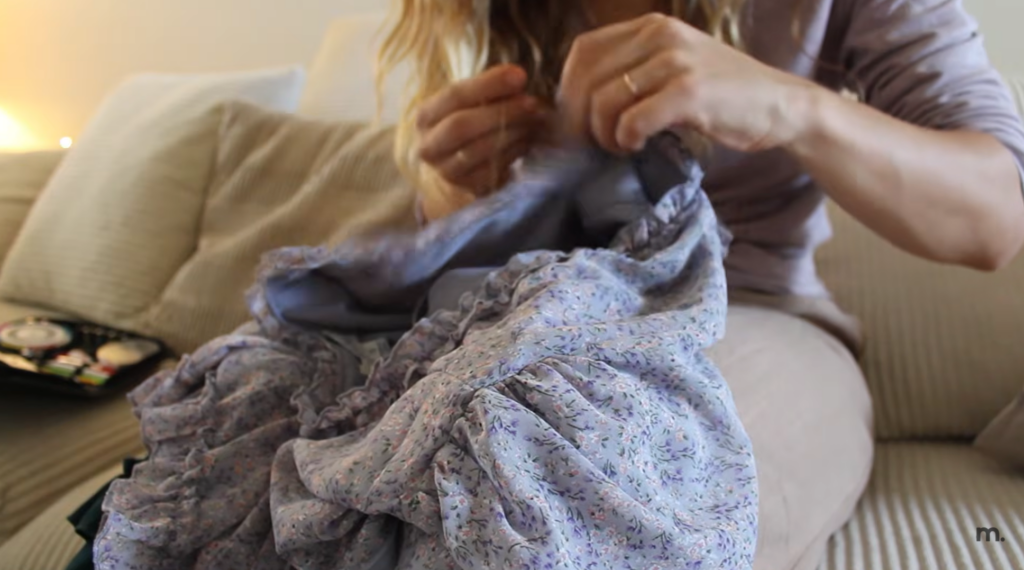
You don’t have to love sewing
Repairing clothes always makes me think of my grandparents. Throwing something away because of a small, fixable problem was simply not their first response.
They repaired it. They made it work. The item continued being an item instead of becoming an excuse to visit a store.
I like that approach. And no, you do not have to become someone who spends cozy evenings hand-stitching elaborate embroidery beside a fireplace. You can remain a person who would rather be doing almost anything else and still sew on one button.
But I also think your reaction to a repair tells you something. If you feel an absolute refusal to put even a tiny amount of effort into a particular piece, perhaps you don’t actually like it very much anymore. Perhaps the loose button isn’t the real reason you never wear it.
That’s useful information, too. Repair the pieces you want back in your life. Let go of the ones you are only keeping out of obligation. The goal is not to rescue every garment at all costs. It is simply to stop treating every small problem as a reason to shop.
2. Host a Clothing Swap: All the Fun of Finding Something New, Minus the Checkout
Of all the things I did for this wardrobe reset, this was probably the one that made the biggest difference.
A friend and I hosted a fall clothing swap at my home, and it was such a success.
I came away with lovely pieces without buying them. Other people found clothes they were excited about. Items I no longer wanted suddenly had somewhere to go.
Honestly, it felt like shopping, except the payment method was clothes I was already happy to part with.
A very agreeable exchange rate.
The idea is simple: replace some scrolling and shopping with friends and community.
Instead of spending an evening looking at clothes worn by strangers on the internet, spend it trying on clothes with people who can actually tell you whether that jacket suits you.
How we organized our clothing swap
We made a simple invitation in Canva and invited people who wore approximately similar sizes.
Everyone was asked to bring ten clean, wearable clothing items that they were ready to let go of. If someone wanted to bring more, that was fine, too.
The important part was that the clothes were in a condition someone else could genuinely enjoy.
Not “this has been haunting the bottom of my laundry basket and I would like it to become your problem.”
Clean. Wearable. Ready for another person.
Nobody needed to buy anything for the occasion, and there was no pressure to bring something impressive. This was not a competition to see who could donate the most desirable sweater.
It was a way to give the clothes we already had another chance.
We spread everything out and sorted it into categories: dresses, sweaters, and so on.
Then we used a simple system:
- We took turns in rounds.
- During each round, everyone could choose four pieces to try on.
- If you liked something, you could put it in your bag.
- If it didn’t work, it went back for someone else to try.
We repeated this over several rounds.
A little structure helped keep things relaxed. Otherwise, “a lovely evening with friends” could very quickly develop the atmosphere of a sample sale with personal history.
Your unwanted clothes might be exactly what someone else wants
One of my favorite parts was seeing other people get excited about clothes their previous owners had stopped appreciating.
You know that sweater you have looked at so many times that you no longer really see it?
Someone else might put it on and immediately love it. And the same thing happens in reverse. A piece that has been sitting unworn in your friend’s closet can feel completely fresh in yours. It doesn’t need to be brand new to be new to you.
Everyone brought a snack, we tried things on, and we had a little group available for outfit consultations.
Sometimes you need a second opinion. Sometimes you need someone to say, “Yes, that actually looks great.” And sometimes you need a kind but honest witness to explain why a particular dress should return to the pile.
There was also much more freedom to experiment. Trying a different style felt easy because I wasn’t handing over money and hoping my future personality would justify the purchase.
If something worked, wonderful. If not, back it went. No return label required.
What happened to the leftovers?
We started with five boxes of clothing. At the end, I only had one box and one bag to take to the donation center.
That felt like a good result: so many pieces had found another person who wanted to wear them. Anything left after a swap can be donated or sold, with the money put toward a good purpose. For me, the best part was giving clothes another round of actual use. They were not just moving from one forgotten corner to another. People were genuinely excited to take them home.
I would happily do this once or twice a year, perhaps in spring and fall. Fresh clothes, good company, snacks, and no shopping bill. That is my kind of seasonal event.
3. Sell Before You Replace: Your Closet Can Fund Its Own Changes
My third approach comes with a rule:
Sell first. Then, maybe, buy. The “maybe” matters. One way I reduced the amount of stuff in our home was by only using money from selling things we already owned when I wanted to buy something else.
Instead of continually adding more, I had to let something go first. It created a boundary. And it made me think much more carefully about whether the replacement was actually worth it.
For this fall reset, buying nothing was still my first choice. But sometimes you do discover a genuine gap. Perhaps you need a basic long-sleeved shirt to make several outfits work. Perhaps there is one specific piece you keep reaching for and don’t have.
That is different from browsing until you discover a need you had never experienced before opening the app. If something really is missing, I would rather fund it with money already sitting in my home in the form of unused stuff.
Don’t turn selling into another pile you have to manage
Of course, there is a small danger here. You decide to sell your clothes. You put them in a bag. You place the bag in a corner.
And then the bag lives there long enough to qualify as furniture. That is not what we are trying to achieve.
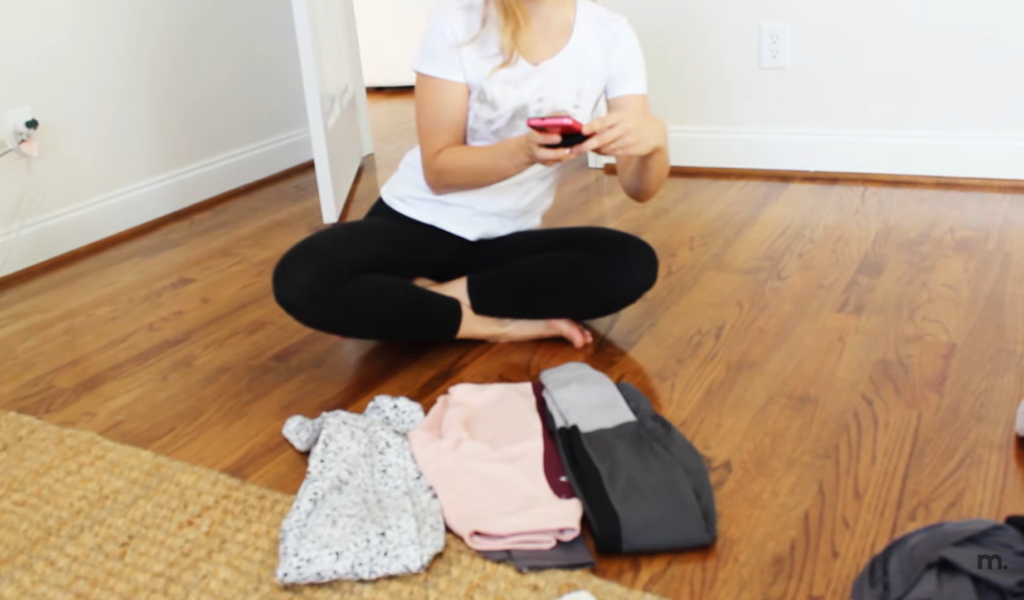
I don’t want to create another big project, so I keep the selling process practical. My approach is to focus on either:
- Individual items worth more than $20.
- Bundles that let several lower-value items move on together.
That way, I can free up space and recover some money without negotiating every single shirt as though I am handling a complicated property transaction.
The point is to move things along. Not to keep storing them while waiting for someone to reimburse me for every shopping decision I made two years ago.
The original price is not coming back just because you remember it
This can be the difficult part.
You remember what you paid. You remember thinking it was a good purchase. You would quite like the resale price to acknowledge all of that.
Unfortunately, the buyer is shopping for a sweater, not your financial closure.
The money has already been spent. Keeping the item longer will not undo that.
So I try to take the lesson, accept a realistic price, and let the piece go to someone who will use it.
An unworn item in my closet is not becoming more valuable simply because I feel guilty about it.
It is mostly becoming more familiar.
If you buy, make the money work harder
If I do use the money from sales, I want it to go toward something considered.
That might mean saving for one or two high-quality pieces that have been on my wish list for a long time. Or shopping secondhand for a specific item.
Ideally, I can combine the two: find a quality piece secondhand instead of paying the full new price.
But there is an important distinction here.
Selling one sweater does not automatically earn me a free pass to buy another sweater.
Otherwise, I have not really changed the habit. I have simply given it a trade-in department.
Before buying, I still want to know:
- What exactly is missing?
- Will this help me wear the clothes I already own?
- Do I need it, or am I enjoying the idea of getting something different?
And if the answer is that I don’t really need anything, the money can stay money.
It does not have to be converted back into knitwear before the end of the week.
4. Restyle What You Own: Borrow the Idea, Not the Entire Outfit
This last step might be the easiest way to make your closet feel different without adding a single thing.
Because most of us have at least a few pieces we describe like this:
“I love it. I just don’t know how to wear it.”
And there it stays.
A perfectly lovely item, waiting patiently for a styling revelation.
Meanwhile, we keep wearing the same familiar combinations because they work, we know them, and getting dressed is not always the moment when we feel most creatively ambitious.
So instead of looking for more clothes, I look for new ideas for the clothes I already have.
Make a small fall mood board
I use Pinterest to put together a simple seasonal mood board.
The important word is “small.” We are not building an archive of every attractive autumn outfit ever photographed. We are looking for a handful of ideas we can actually use.
I already know what happens when I save hundreds of things with the intention of returning to them later. My recipe collection would like to remain anonymous.
Search for the styles you like, or get specific about an item you already own. You can also include details such as your height or hair color if that helps you find inspiration that feels more relevant to you.
My favorite approach is to start with the piece I like but never wear. For example: “red leather jacket outfits.” Now I’m not vaguely browsing for a new identity. I’m solving a specific problem involving a jacket that is already in my house. A much more manageable assignment.

Look at how the outfit works
The goal is not to recreate the inspiration picture item by item. That is where a styling exercise can quietly turn into a shopping list. Instead, look at the combination.
What is being worn together? What makes it feel different? Is there a belt? A particular pair of shoes? Are the sleeves rolled up? Is the jewelry doing more work than you first noticed? Then close the app and go to your closet.
If the photo has a brown coat and yours is beige, that is fine. Nobody is grading your accuracy. You are borrowing an idea, not applying for a position as the photograph’s understudy.
Try the similar pieces you already own. Change the shoes. Add a belt. Try a hat. Put on the jewelry and accessories you keep forgetting about. Sometimes the “missing piece” is not something you need to buy. It is something you already own but have never thought to put with that outfit.
Give the clothes a chance to work together
I think this is where a wardrobe reset becomes much more interesting than a haul. A haul asks, “What else can I add?” Restyling asks, “What can I do with this?” And that question encourages you to actually engage with your clothes instead of just storing them between purchases.
You might discover that a familiar sweater works with a different pair of pants. That a dress feels completely different with other shoes. That the jacket you never wear was waiting for a combination you already had.
An outfit can feel new simply because you have never worn those pieces together before. The receipt is not what makes it interesting.
Plan a few outfits, not your entire future
I keep a mood board for each season, and on Sundays I usually check the weather forecast and plan outfits for the next three or four days. Nothing elaborate. Just enough to make getting dressed easier and remind myself to wear something beyond the same dependable rotation.
And personally, I prefer not to look for this kind of inspiration on Instagram. I go in looking for one outfit and risk emerging much later with no outfit, several new perceived problems, and a suspiciously detailed understanding of a stranger’s kitchen renovation.
For this task, I want inspiration with an exit. A few ideas. Close the app. Open the closet. That is where the useful part happens.
A Fall Wardrobe Refresh Does Not Have to Be a Shopping Event
That was my fall closet reset.
No shopping spree. No pile of packages. No new collection of things I was supposed to need.
Just four straightforward approaches:
- Mend the pieces that need a little attention.
- Swap clothes you no longer wear.
- Sell before considering a replacement.
- Get inspired and restyle what you already own.
And none of this has to be limited to fall. You can do the same thing whenever a new season makes you feel as though your perfectly functional clothes have suddenly expired.They haven’t.
Before Black Friday arrives with its many persuasive explanations of what your life is missing, take another look at what is already there. Maybe a piece needs a repair. Maybe it needs a different owner. Maybe it needs a different pair of shoes.
Not every wardrobe problem needs a shopping solution. For me, this is also about appreciating the resources I already have. The clothes, yes, but also the money, time, and attention I could spend somewhere else.
Because autumn is happening outside. And I would much rather be walking through a fall forest in clothes I already love than spending the afternoon inside a mall, looking for the correct outfit to enjoy a season I am currently missing.
The leaves are putting on quite a show. I don’t need to buy a new sweater to attend.
What would you start with: a small repair, a clothing swap, selling a few unworn pieces, or finally styling that one item you love but never wear? Let me know in the comments. I read every one and try to reply to each of you.
And if the amount in your closet feels too overwhelming to start, watch my wardrobe-decluttering video, where I walk through my German approach with just one hour of active decluttering time.
Rich in peace, not in stuff.