I’m going to retire at 40. And before you close this tab, let me tell you what I’m not working with. No trust fund. No inheritance sitting in a lawyer’s drawer somewhere. No six-figure tech salary. And no — unfortunately, tragically, painfully — I did not buy Bitcoin in 2015 for the price of a decent sandwich. (If you did: congratulations, and also, please stop telling people at parties.)
My husband and I have a very normal, very middle-class income. The kind of income where you check the price of the good olive oil and then buy it anyway, but you feel something. And I’m still going to get there. The reason isn’t a secret hack. There’s no app, no side hustle stack, no “one weird trick the banks don’t want you to know.” A huge part of it is just culture and habits, executed boringly, repeatedly, over years and years. Sometimes decades.
When I first moved from Germany to the US, I kept having this strange experience. I’d mention something completely unremarkable — something every woman in my hometown does without thinking — and Americans would look at me like I’d just announced I churn my own butter in a cave. Meanwhile, things that are considered completely normal here made my German brain start doing math in the middle of a conversation.
Especially around money. And especially around the things women are expected to spend money on. So today I’m walking you through six things I refuse to do as a German woman in a country that does things very differently — and, more importantly, what I do instead, and what that actually adds up to over 10, 20, 30 years. Fair warning: at least two of these will annoy someone. Possibly you. I’d genuinely love to hear about it in the comments.
Let’s dig in.
1. I Would Never Spend $15,000 On An Engagement Ring
Let’s start with the controversial one, because there’s no gentle way to walk into this room. I’m not spending five figures on a ring. I’m not spending four figures on a ring, honestly. And I know — I know — this is normal here. Plenty of countries spend significantly more on engagement and wedding rings than Germans do. I’m not pretending Germany invented restraint.
But let’s look at the actual numbers, because they’re wild when you put them side by side. In the US, the average engagement ring came in around $4,600 in 2025, according to The Knot’s Jewelry & Engagement Study, which surveyed more than 10,000 couples — down from $5,200 the year before, mostly because lab-grown diamonds are eating the market (Rapaport). That’s the average. The tail goes much, much higher. Everyone knows someone with a $15,000 ring. Everyone knows someone who financed a $15,000 ring, which is a whole separate conversation we’ll get to in section four.
In Germany? Couples spend an average of about 1,125 euros on an engagement ring, with the typical range sitting somewhere between 250 and 2,000 euros (Bridebook Weddings Report). Wedding bands as a pair usually land between 500 and 2,500 euros (Trauringe-Ratgeber). That’s not a small gap. That’s a used car.
What I actually wore
My wedding band cost me $50. Not because we were broke. Because it was my grandmother’s. We took it to the little jewelry shop in town, had it resized to fit my finger, had it polished, and I walked out with a ring that has been on a woman in my family for longer than I’ve been alive.
Fifty dollars. And it’s the only piece of jewelry I own that makes me emotional. My engagement ring was 300 euros. You know what we did with the difference? Two things: the house, and our ETFs.

The part where I ruin rings for you with math
Here’s the thing about a $15,000 ring that nobody puts on the little card in the display case.
It’s not a $15,000 decision. It’s a $114,000 decision. If you take $15,000 and put it into a broad market index fund at a 7% average annual return instead:
- After 10 years: ~$29,500
- After 20 years: ~$58,000
- After 30 years: ~$114,000
Same ring. Same finger. Same marriage. But one version quietly turns into a paid-off kitchen renovation, and the other version is a rock you’re slightly afraid to wear while gardening. And look — if a beautiful ring genuinely brings you joy every single day for forty years, that’s a real return too. I’m not the joy police. But I think a lot of people never actually chose the expensive ring. They inherited a rule.
The rule that was invented by an ad agency
Speaking of which: the famous “three months’ salary” rule? That came from a De Beers advertising campaign in the 1930s. It’s not tradition. It’s not culture. It’s not something your great-grandmother believed.
It’s marketing. It worked so well that most people now experience it as a moral obligation.
In Germany, that rule basically never took hold (velur). Ask a German woman how much her partner should spend on a ring and she’ll probably look confused, then say something like “however much a nice ring costs?”
It’s not about the ring. It’s about the whole relationship economy.
German women are, statistically, pretty good with money. And honestly — women overall are better with money than society likes to admit. We just don’t get the same headlines. But I think the bigger difference is relationship culture.
German women generally don’t expect their partners to spend big on birthdays, anniversaries, or Valentine’s Day. Valentine’s Day in Germany is barely a real holiday. It’s more of a rumor. What we want is to be acknowledged. That’s it. That’s the whole thing.
A handwritten card. A picnic in the park with terrible supermarket bread and good cheese. Him taking the kids on a Saturday morning so I can sleep in and drink coffee while it’s still hot — which, if you have small children, is roughly equivalent to a spa weekend.
What we specifically do not need is a $100 bouquet that is visibly dying by Thursday and in the compost by Sunday. That’s not romance, that’s a subscription to disappointment with a 5-day billing cycle.
So if you want to charm a German woman: you don’t need to spend money. You need to be thoughtful and make her feel appreciated. This is genuinely cheaper and harder, which is why it works.
Try this instead
- Set a ring budget as a percentage of your combined annual savings, not your salary. Suddenly it feels very different.
- Look at estate jewelry, family pieces, or vintage. Better craftsmanship, better story, half the price.
- Whatever you don’t spend, move it the same week into the investment account. Otherwise it evaporates. Money you “saved” but didn’t move is money you spent slowly.
- Name that account something ridiculous and specific. Ours is basically “Farm Fund.” It’s astonishing how much harder it is to raid an account that has a dream written on it.
2. I’m Not Giving Up My Career For Marriage Or Family
Okay. This is the one that usually gets people fired up, so I’ll just say it straight:
I am not giving up my career.
Not for marriage. Not for family. Not because I don’t love them — because I do, enormously — but because you genuinely never know what the next 10, 20, or 30 years will look like. And I already know somebody is typing in the comments right now: “Yeah, but not every German woman does that.”
I know. You’re right. Let me be very clear:
If you want to stay home, and you have a real agreement with your partner that keeps you financially protected while you do it — retirement contributions in your name, savings in your name, a written understanding, not vibes — then genuinely, go for it. If it makes you happy, that’s a completely valid life. I’m not here to shame anyone’s choice.
But let’s be honest about what the default is, and what the default costs.
What the numbers say in Germany
Germany is not some feminist utopia here. Let’s not pretend. 74% of women in Germany are employed, compared to 81% of men. But 49% of employed women work part-time, versus 12% of men — both record highs (Statistisches Bundesamt). Among working mothers, the part-time rate is around two-thirds (Destatis).
So no, German women haven’t solved this. But here’s the shift: German women overwhelmingly stay attached to the labor market. They reduce hours, they don’t disappear. They keep the qualification, the network, the pension contributions, the ability to scale back up. The connection stays alive.
And the reason that matters so much is sitting in the next statistic.
The number that should scare all of us
In Germany, the gender pension gap in 2023 was 27.1% — meaning women over 65 receive, on average, 27% less retirement income than men. And if you strip out survivor’s pensions — the money women receive because their husband died — the gap jumps to 39.4% (Statistisches Bundesamt).
Read that twice. Nearly 40% of the “gap closing” is a widow’s pension. That’s not financial independence. That’s a financial outcome that depends on a man dying in the correct order. That single statistic explains more about German women’s money behavior than anything else I could tell you.

“If he can feed you, he can also starve you”
There’s a phrase that floats around in German conversations about this, and it’s blunt in the way German gets:
If he can feed you, he can also starve you. It’s not cynicism about men. It’s not assuming your partner is a villain in waiting. My husband is wonderful. He is not going to starve me. It’s about structure. For most German women I know, the goal is a partnership at eye level — Partnerschaft auf Augenhöhe. And the whole point of an eye-level partnership is that both people could leave, and neither one wants to. That’s the version of love I want. Not “I stayed because the numbers made leaving impossible.” I want “I stayed because I looked at the exit, saw it was unlocked, and chose the kitchen table anyway.”
Choice is the luxury good. Not the ring.
My 30th birthday present (brace yourself)
For my 30th birthday, my husband gave me an ETF contribution instead of gifts.
I know. I know how that sounds. Some of you just physically recoiled. “She got a spreadsheet for her birthday.”
But here’s the thing: there was genuinely nothing material I wanted that year. Nothing. I looked around our home and every category was already full. So I’d rather compound my retirement portfolio.
Not because I’m planning an exit. The exact opposite.
Because I want to grow old with this man knowing that staying was always a decision, never a dependency. That the version of me at 70 has her own money, her own pension, her own name on her own accounts.
That’s not unromantic. That is the single most romantic financial decision we’ve ever made together.
Try this instead
- Never let a career gap be an accident. If you take one, negotiate it: retirement contributions in your name, a savings transfer every month, a written plan for re-entry.
- Keep one professional skill alive even during heavy family years. One certification, one freelance client, one course a year. Skills rust faster than you think and re-entry is brutal.
- Run the actual number: if this relationship ended in 10 years, what would my independent income and net worth be? Not to be morbid. To be informed.
- Check whose name is on things. Not whose money paid for them. Whose name.
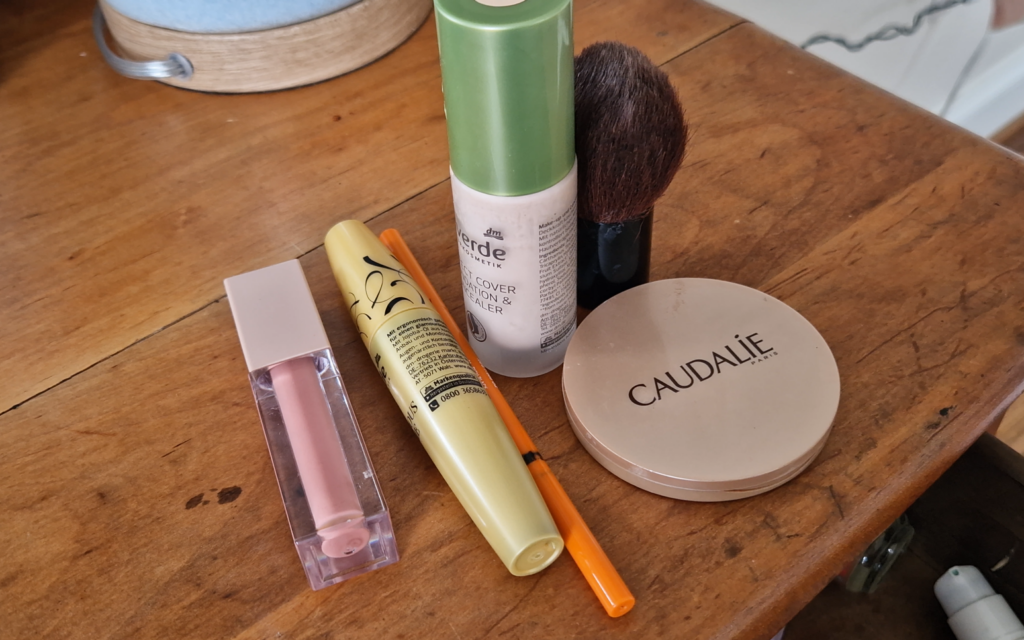
3. I’m Not Spending Hundreds Of Dollars A Month To Maintain My Appearance
Hair. Nails. Brows. Lashes. Tanning. Botox. Filler. Peptides. Lip flip. Baby Botox. Preventative Botox. Whatever launched last Tuesday.
I’m not doing it. And the reason is not moral, it’s arithmetic.
The subscription nobody calls a subscription
Here’s what got me: almost every one of these is a maintenance contract disguised as a treatment.
You don’t get Botox. You start Botox. And then in three or four months you get it again. And then again. Because when it wears off, you don’t return to neutral — you return to your face, but now you’re comparing it to the version you paid for.
Gel nails need a fill in two to three weeks. Lash extensions need a fill in two to three weeks. Color needs a root touch-up in six. The tan needs topping up. The peptides only work while you’re buying them.
It’s not a purchase. It’s a rental agreement on your own face, and the lease renews automatically.
The research backs this up: one industry survey found participants spending over $6,000 a year on professional beauty maintenance, and — this is the part that got me — at-home alternatives often weren’t meaningfully cheaper, because people bought the products and still went to the salon (Self Financial).
Six thousand dollars a year. That’s not a splurge. That’s a car payment. That’s a small pension.
The moment my German brain broke
When I moved here and started hearing what women actually spend per month — $500, $600, sometimes more once you add injectables — my brain just… started calculating. Involuntarily. Mid-conversation. I’d be nodding along and internally running a compound interest formula like some kind of haunted spreadsheet.
So let me show you what my brain was doing:
$600/month, invested at 7% average annual return:
| Time invested | You contributed | It’s worth |
|---|---|---|
| 5 years (say, ages 22–27) | $36,000 | ~$43,000 |
| Then left alone until 40 | $0 more | ~$118,000 |
| 10 years of contributions | $72,000 | ~$104,000 |
| Then left alone 20 more years | $0 more | ~$402,000 |
Five years. Ages 22 to 27. Then you never contribute another cent and just let it sit. By 40 you’re sitting on roughly $118,000.
If you keep going for ten years and then let it ride for two decades, you’re looking at something in the neighborhood of $400,000.
That is a house deposit. That is walking away from a bad job. That is not needing anyone’s permission.
To be very clear: this is not a “let yourself go” argument
It is genuinely not that German women don’t care about appearance. We absolutely do. There’s excellent skincare, good haircuts, nice clothes, actual effort.
The difference is where the ceiling is.
The “no-makeup makeup look” that cycles through TikTok every eight months as a revolutionary trend? That’s just a basic Tuesday in Germany. That’s what a woman looks like going to the office, the bakery, and her friend’s birthday dinner.
You will rarely see acrylic nails or lash extensions on a German woman. (It’s getting a bit more popular lately, especially with younger women, so I’m not going to pretend Germany is frozen in 2004.) But the mainstream norm is still very much on the natural end.
And here’s the culturally interesting bit that surprises Americans:
In Germany, the high-maintenance look often reads as lower status, not higher.
Dyed hair, full set of nails, lashes, very styled outfit for a normal weekday — a lot of people will quietly file you as “bougie” or “a bit extra.” It’s not a compliment. And German men, at least in every dating survey that gets published, consistently claim to prefer the natural look.
So the incentive structure is completely inverted. In the US, spending heavily on appearance is often read as success. In Germany, it can be read as trying too hard. Which means the social pressure — the thing actually driving most of this spending — points in the opposite direction.
The point isn’t that German taste is superior. It’s that most of what we think is “just what I like” is actually the water we’re swimming in. Change countries and your preferences change with it. That’s worth knowing.
Try this instead
- Add up your true annual beauty cost. Every appointment, every product, every tip, every touch-up. Most people underestimate by 40–60% because they only count the big appointments.
- Sort every line item into: things I’d still do on a deserted island vs. things I do because of other people. Cut from the second list first.
- Keep the one or two things that genuinely make you feel like yourself. Kill the rest. This isn’t monk mode; it’s editing.
- Set up an automatic transfer of the difference on the same day you’d normally have your appointment. The money needs somewhere to go or it will simply find something else to be.
4. I’m Not Financing My Lifestyle — Especially Not My Car
Quick question before we go further, and please answer honestly in your head:
What are you driving right now, and is it paid off?
Take a second with that one.
Meet the schwäbische Hausfrau
Germany has this deeply embedded cultural figure called the schwäbische Hausfrau — the Swabian housewife. She’s from the southwest, she’s thrifty to a degree that borders on athletic, and she is the patron saint of German household finance.
Her philosophy, roughly:
Save first, spend later. Be careful with your expenses. And do not owe anybody money if you don’t absolutely have to.
German politicians have literally invoked her in budget speeches. That’s how baked in this is.
The result is a deep, almost instinctive skepticism toward consumer debt.
The only debt broadly considered acceptable in Germany is:
- A mortgage on the home you live in
- A mortgage on a property you rent out as income
That’s it. That’s the list.
Credit card debt for a vacation? Financing a TV? Paying for a sofa in 24 monthly installments? Most Germans would rather sit on the floor. Genuinely. Germans will sit on the floor of their own apartment for four months while they save for the couch, and they will feel great about it.
Germans also famously love cash — a lot of small businesses are still cash-preferred, and plenty of people carry a “Nur Bargeld” mindset. Debit over credit. Paying now over paying later. It’s not that Germans can’t do credit. It’s that the cultural default is don’t.
But wait, Germans love cars
Absolutely we do. Porsche, Mercedes, BMW, Audi — those are all German brands. Germans are enormously into cars. The Autobahn is not a myth.
But here’s the twist:
Most German women I know genuinely do not care what car you drive.
And it’s the exact same dynamic as the beauty thing, just flipped to the other gender.
If a man rolls up trying to demonstrate his value through an obviously financed luxury car, he will frequently achieve the precise opposite of what he intended. Because the question in her head isn’t “wow, he’s successful.” It’s:
“Okay… but is that paid off?”
A leased status car doesn’t read as wealth. It reads as someone who prioritized appearing wealthy over being wealthy, which is a genuinely alarming trait in a long-term partner. It signals a person who might not be a rational financial teammate. And in a culture where couples very much think of themselves as a financial team, that’s a real red flag.
Going into debt for cars, TVs, or vacations isn’t just seen as a bad financial move in Germany. It’s seen as a character trait. Which is why so many people simply… don’t.
Yes, this makes German women sound boring. We are, a little. We like knowing that the things around us are actually ours. Not rented from a bank at 6.5% for 72 months.
What the car actually costs
The average new car payment in the US hit $748 a month in Q3 2025, on an average transaction price of $42,332 (Experian, via Motor1). By Q1 2026 it was $770 for new and $531 for used (Experian).
Here’s the version nobody wants to see:
$700/month, invested at 7% instead of paid to a lender:
- After 10 years: ~$121,000
- After 20 years: ~$365,000
- After 30 years: ~$854,000
Nearly a million dollars. From one car payment. Held continuously, the way most people actually hold car payments — because when one loan ends, most people just buy the next car.
That’s the real cost of the “I’ll always have a car payment” mindset. It’s not $700 a month. It’s retirement.
And that’s before insurance, which is dramatically higher on a financed car because full coverage is mandatory.
To be fair to America
I’m not going to pretend the American approach is irrational. It genuinely isn’t, in context.
Distances here are enormous. Public transport in most of the country ranges from “limited” to “theoretical.” In Charlotte, where I live now, a car isn’t a status symbol — it’s a requirement for employment. In Germany I could live comfortably without one because the bus, the regional train, and the bike lane actually work.
So Americans aren’t being frivolous by needing a car. The infrastructure genuinely demands it.
The question isn’t whether to have a car. It’s whether it needs to be new, and whether it needs to be financed for six years.
Try this instead
- Buy 2–4 years used, in cash, or as close to cash as you can get. Someone else already ate the steepest depreciation for you. Thank them.
- If you can’t buy in cash yet, pay yourself the car payment first. Drive your current car and send $500/month to a savings account for 18 months. Now you have $9,000 and zero interest. This is the single most powerful car trick that exists.
- Never finance anything that loses value while you sleep. Houses, education, income-producing assets — arguable. Sofas, TVs, phones, vacations — no.
- Do the “still paying?” test on every purchase over $500: will I still be paying for this after I’ve stopped enjoying it? If yes, don’t.
5. German Discipline Is Brutal — But It’s Not Optional
This one sounds harsh, and I’m going to say it anyway, because it’s true:
German women really, really don’t want to be lazy — or to be seen as lazy.
There’s a cultural weight to it that’s hard to explain if you didn’t grow up inside it. Let me go back a generation to explain where it comes from.
My grandfather’s two sentences
My grandfather had a saying:
“Wer den Pfennig nicht ehrt, ist des Talers nicht wert.”
Literally: He who does not honor the penny is not worthy of the dollar.
It’s an old proverb, and it comes from a very specific historical moment. After 1945, German women held families together with almost nothing. They were the Trümmerfrauen — the “rubble women” — clearing bombed cities by hand, stretching rations, mending clothes for the fourth time, trading, improvising, making something out of debris.
That toughness didn’t disappear when the economy recovered. It got passed down as temperament. My grandmother’s generation raised my mother’s generation, who raised mine. Frugality stopped being survival and became identity.
He had a second line that I think about constantly:
“We are not leaving money on the table just because it’s inconvenient to pick it up.”
That, honestly, is the whole philosophy in one sentence.
What “picking it up” looks like on a normal week
It’s never dramatic. It’s never a big financial move. It’s small, slightly annoying things, done consistently:
- Returning the deposit bottles. Germany’s Pfand system gives you 25 cents back on most single-use bottles and cans. A household easily does €10–20 a month. You take the bag to the machine. It takes six minutes. Nobody throws away a bottle with money in it — that’s not thrift, that’s just not being a lunatic.
- Eating what’s actually in the fridge. Even when you don’t feel like it. Even when the DoorDash app is right there, glowing, understanding you. There’s a whole German cooking category built around this called Resteessen — leftovers food. It’s half the reason Bauernfrühstück exists.
- Doing your own tax return. Yes, it eats four hours of a Sunday. German tax returns are notoriously fiddly. The average refund in Germany is over €1,000. That’s €250 an hour. Show me a side hustle with that hourly rate.
- Walking or biking to work. Saves gas, saves parking, saves the gym membership you were going to feel guilty about anyway.
- Doing the continuing education. The Weiterbildung. The certification. The evening course. Because a €4,000 salary bump doesn’t happen once — it compounds through every future raise, every future job, and every pension contribution for the rest of your working life.
The thing my grandmother told me
My grandmother died several years ago now. But she said something to me that I’ve never been able to put down.
She said that as a woman — especially as a woman — you have to learn to own your place and own your wealth, because you don’t get anything for free in this world.
She wasn’t bitter about it. She was just accurate.
And when I look at that 27–39% pension gap again, I think she was more accurate than she knew.
So: call your insurance company every single year and make them re-earn your business. Actually cancel the subscriptions. Actually track where the money goes.
Are those things inconvenient? Yes. Deeply.
Are they hard? No. Not one of them is hard.
And with a bit of discipline, we can do inconvenient things — and use them to level out economic disadvantages we didn’t choose and didn’t design. It sucks that the playing field is tilted. Discipline doesn’t fix the tilt. It just means the tilt doesn’t get to decide your outcome.
The subscription trap, explained by your own brain
Here’s the sneaky part.
Not canceling a subscription does not register in your brain as spending.
Buying a $12 lunch registers. You feel it. There’s a moment of decision, a small internal negotiation, a tap.
But $12.99 leaving your account for a streaming service you last opened in March? There’s no moment. No decision. No friction. It’s not an active expense — it’s a passively accepted one.
And passively accepted expenses are where money actually dies. Not in the fun purchases. In the invisible ones.
Americans underestimate their subscription spending by a famous margin — most surveys find people guess around $80/month and the real number is closer to $200+. That’s roughly $1,400 a year of pure leak. Invested from age 30 to 65 at 7%, that leak alone is worth around $200,000.
Two hundred thousand dollars. For not opening an app once a year.
Try this instead
- Do a subscription audit every quarter. Put it in your calendar with an actual alarm. Scan your last three bank statements line by line — not from memory, memory lies.
- Pick a “Money Sunday” — one hour a month. Insurance check, subscription check, budget check. One hour a month is twelve hours a year, and it will be the highest-paid twelve hours of your year.
- Adopt the sentence: “I’m not leaving money on the table just because it’s inconvenient to pick it up.” Say it out loud when you don’t want to make the phone call. It works annoyingly well.
- Build the small refunds habit: the deposit bottles, the rebate, the price-adjustment, the expense reimbursement you keep forgetting to file. None of it is life-changing alone. All of it is training.
6. I’m Not Outsourcing Things I Could Learn To Do Myself
When I moved to the US, I wasn’t shocked exactly — but I was genuinely puzzled.
Everyone seemed to have a lawn guy. Not a landscaper for a big project. A guy who comes every week to mow a lawn that takes twenty minutes.
The coffee machine breaks? Someone comes. The fridge makes a noise? Someone comes. Something needs assembling? Someone comes.
And my German brain kept going: …but have you tried?
Because in Germany, the reflex is the opposite. The first move is always: let me at least look at it. Watch a video. Open it up. Try. Then call someone if you genuinely can’t.
How I was raised
My father taught me how to use a drill. How to change light bulbs and fixtures. How to change a tire.
Specifically — and he was explicit about this — so that I would never have to pay someone else to do it.
Not because we couldn’t afford help. Because being able to do things yourself is a form of freedom. A woman who can change her own tire on a dark road doesn’t have to wait for anyone. That’s not about the €80 you save. That’s about not being stuck.
There’s a German word for this that doesn’t quite translate: Selbstständigkeit. It’s usually rendered as “independence,” but it’s more literally “self-standing-ness.” Standing on your own. It’s considered a core thing to raise a child into — a daughter very much included.
The compounding you don’t see
Here’s what I love about this one: it compounds twice.
Once in money. A weekly lawn service in the US runs somewhere around $150–200 a month during the season. Doing it yourself, after the mower pays for itself, is basically free plus gas. Over a decade that’s thousands of dollars.
And once in capability. Every single time you do something yourself, you gain knowledge, skills, and confidence — and the next thing gets easier. The person who assembled their own furniture is the person who fixes their own door hinge, who then replaces their own faucet, who then doesn’t panic when the washing machine floods.
Skills stack. Invoices don’t.
And every euro you didn’t hand over goes somewhere it can actually grow: your wallet, not somebody else’s.
Where I draw the line (because I’m not insane)
I want to be clear that this is not a purity test. There are three situations where I happily pay someone:
- Safety. Gas lines, main electrical panels, roof work, anything where the failure mode is “house fire” or “dead.” Pay the professional. Every time.
- Legal requirements. Some work legally requires a licensed trade. Fine.
- Genuine time math. If an hour of your paid work is worth more than the job costs, and you actually would work that hour — outsource it. That’s not laziness, that’s arithmetic. The trap is when people outsource an hour and then spend that hour scrolling.
The German instinct isn’t “never pay anyone.” It’s “decide consciously.” The problem with the American default isn’t that people hire help — it’s that hiring help is the automatic first thought, which means it never gets evaluated.
Try this instead
- The one-video rule. Before hiring anyone for anything, watch one YouTube video on it. Just one. You’ll be genuinely surprised how often you close the video and think, “oh, that’s it?”
- Build a basic toolkit: drill, screwdriver set, adjustable wrench, level, tape measure, tire iron that actually fits your car. Under $150 and it will pay for itself in a single weekend.
- Learn five specific skills this year: change a tire, unclog a drain, patch drywall, sew a button and hem, reset a tripped breaker. That’s a full afternoon of learning, total, for a lifetime of not calling anyone.
- Teach your kids. Daughters especially. This is the actual mechanism by which the whole culture passes down.
So What Does This Actually Add Up To?
Let’s put the six things in one place, because individually they sound like penny-pinching and together they look like something else entirely.
| What I skip | Rough annual cost avoided | Invested 20 yrs @ 7% |
|---|---|---|
| The $15,000 ring (one-time) | $15,000 once | ~$58,000 |
| Beauty maintenance at $600/mo | $7,200/yr | ~$315,000 |
| Financed new car at $700/mo | $8,400/yr | ~$365,000 |
| Subscription & insurance leaks | ~$1,400/yr | ~$61,000 |
| DIY instead of outsourcing | ~$2,000/yr | ~$88,000 |
I’m not claiming every reader has all five of these. Most people have two or three.
But two or three is enough. Two or three is the entire difference between working until 67 and choosing to stop at 40.
And notice what’s not on this list. There’s no extreme frugality here. No skipping meals, no reusing tea bags, no living without heat, no five-year no-buy challenge. I have a nice home. I buy good food. We travel. The olive oil is the good one.
This is not about restriction. It’s about not letting six specific, culturally-installed defaults quietly eat a million dollars.
The Real Point: Rich In Options, Not Rich In Stuff
Let me try to sum up what all six of these actually have in common.
German women are not sacrificing their future to live in the present.
We don’t want every dollar to vanish into the lifestyle we’re living today — because we know exactly what’s waiting at the other end. That pension gap isn’t a rumor. It’s published, annually, by the federal statistics office. We can read it.
And yes, there’s real truth in “live every day like it’s your last.” I’m not arguing for a joyless life. But let’s be realistic: most of us will hopefully live to 75, 85, longer if we’re lucky. We are going to need money then. For retirement. For our families. For the opportunities we can’t predict yet.
Here’s the reframe that changed everything for me, though:
It was never about restricting myself as much as possible. It’s about what I gain on the other side of the discipline.
Because on the other side of these boring, unglamorous, slightly inconvenient habits is one thing:
The ability to say no.
- No to a partner who isn’t good for you
- No to a job that’s making you sick
- No to a city you’ve outgrown
- No to a career you chose at 22 and never actually liked
- No to staying somewhere just because leaving costs money you don’t have
You can change careers. You can change your home. You can move wherever you want. You can take three months off when your mother gets sick. You can walk out of a room.
That’s what the money is for. Not the number. The number is just the mechanism.
I think a lot of German women are willing to accept daily inconvenience in order to be free when it counts. The deposit bottles, the tax return, the four-hour Sunday, the cheap ring, the natural nails, the used car — none of it is heroic. It’s just consistently choosing the future over the moment, about forty times a month, for twenty years.
And I know plenty of German women watching or reading this won’t identify with 100% of what I just wrote. Some of you have gel nails and a leased Golf and you’re doing beautifully, thank you. Germany is not a monolith and I’m not the spokesperson.
But I think there’s one thing we’d broadly agree on:
We’d rather be rich in options than rich in stuff and status symbols.
That’s it. That’s the whole German thing.
Where To Start (If This Hit A Nerve)
If you read all of that and felt a small, uncomfortable flicker of recognition — good. That flicker is useful. Here’s what I’d do with it.
This week:
- Pull your last three months of bank statements. Not the app summary. The actual line items.
- Highlight every recurring charge. Every single one. Then ask, per line: did I actively choose this last month?
- Cancel three things. Any three. Momentum matters more than optimization.
This month:
- Add up your true annual spend in each of the six categories above. Write the real number down.
- Pick the one with the biggest gap between “what it costs” and “what it gives me.”
- Set up an automatic transfer of that amount into an investment account. Same day every month. Automate it so willpower is never involved.
This year:
- Learn the five DIY skills.
- Do one Weiterbildung — one course, one certification, one skill that raises your earning ceiling.
- Make sure something meaningful is in your name. Not the household’s. Yours.
And if your finances could use a proper German-style once-over, my budget planner is linked below. It’s built to catch exactly the leaks and gaps in this article — the passive expenses that never register as spending, the ones that quietly cost you a house deposit over a decade.
Now I Want To Hear From You
We’ve got a lot of nationalities in this community, and this is genuinely my favourite question to ask:
What is the one thing women in your culture absolutely refuse to spend money on?
And the flip side — what’s considered completely reasonable where you’re from, that would make people in another country gasp?
I have a strong feeling this comment section is going to be excellent.
Rich in peace, not in stuff.
Nothing in this article is financial advice — it’s one German woman’s experience, some published statistics, and a lot of compound interest math. All investment return figures assume a 7% average annual return, which is a common long-term historical estimate for broad market index funds, not a guarantee. Your mileage, market, and tax situation will vary.