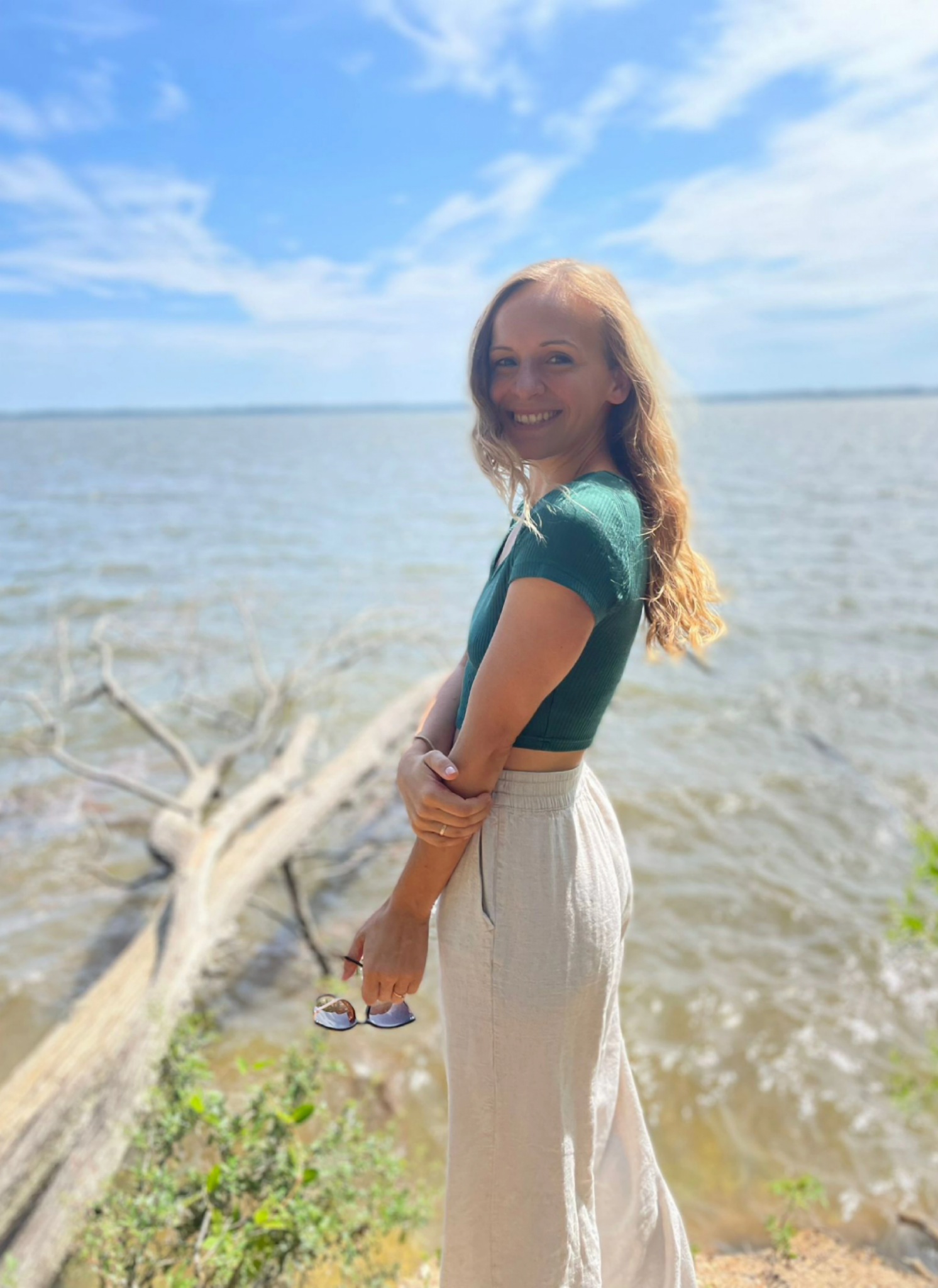
After 33 years of trying to figure out what I wanted to do with my life, I finally feel like I know.
That sentence still feels strange to write. For most of my twenties, I was searching. I was trying to make decisions that looked right from the outside. I chased the things I thought I was supposed to want: career progress, security, achievement, the next logical step, and the version of success that other people seemed to expect.
Now, in my early thirties, I have made one of the biggest decisions of my life—and for the first time, it feels deeply, clearly like my own. My husband, our two children, and I will be moving back to Germany in the summer of 2027!
We currently live in South Carolina in the United States, and after three years here, we had to decide whether we wanted to extend our stay. We could have stayed longer. We could have continued pursuing the American corporate path, climbing higher on the career ladder, earning more money, and building the kind of life that many people would consider successful.
But we said no! Instead, we are returning to rural northern Germany to start over in a place that has been part of our family’s story for generations. We want to create a simpler countryside life, grow food, restore our land, preserve old traditions, and possibly build a small market garden.
This is not a story about escaping America because America is bad. It is not. We love the United States. Living here has changed us in many positive ways. It gave us experiences we will always be grateful for, brought us closer together as a family, and helped us understand ourselves better. But sometimes, living far away from home is exactly what helps you see what home means to you.
The Decision to Leave Was Not Easy
This decision took time. When we moved to the United States, we kept our place in Germany. We had never lived in the US before, so we did not know how we would feel. We did not know whether we would love it, whether we would miss Germany, or whether homesickness would become difficult.
For a long time, we felt very comfortable in the United States. We made a life here. We became parents here. We traveled, learned, changed, and grew as a family. There were times when we were not sure if we would ever return.
But eventually, we were faced with a clear choice: extend our time in the United States for several more years and continue on the corporate path, or return to Germany and build the life we had slowly begun to dream about. Making that decision felt emotional because both options had value.
Staying would likely mean more money. It could mean a more traditional version of career success. It could mean continuing to pursue the American dream in the way people often describe it: working hard, moving forward, earning more, achieving more, and building a bigger life.
But something in both of us knew that this was no longer the path we wanted.My husband was in the middle of a corporate management career. From the outside, everything looked fine. But he felt that something was missing too. We both felt it, even if we could not immediately explain what the alternative should be.
Over time, something changed. Living in the United States, becoming parents, traveling, being away from Germany, and growing together as a family helped us realize that the life we had left behind was actually much closer to what we wanted than we had understood before.
The quiet countryside. The land. The slower rhythm. The connection to family history. The possibility of growing food. The idea of building something with our own hands. That became more meaningful to us than moving further up a career ladder.
The Frugal German Farmlife Is What We Want
I am writing this from Germany, where I came back for my brother’s wedding. Standing in our old backyard again, I was reminded of how incredibly beautiful this place is. It is peaceful. There are no direct neighbors. There is space, grass, old trees, memories, and so much potential.
It is not perfect. In fact, after being away for more than two years, the outside of the property has been somewhat neglected. Friends and family have helped take care of it, and we are very grateful for that, but it is still clear that a lot of work is waiting for us. The garden is not yet the flourishing homestead garden I imagine. The yard needs attention. There are projects everywhere. The property was intentionally kept easy to maintain because we knew we would not be here full time.
Right now, it is mostly grass. But I do not only see grass. I see fruit trees. I see vegetable beds. I see pollinator-friendly flowers. I see bees. I see tomatoes in the greenhouse. I see cucumbers growing in a tunnel. I see a kitchen filled with homegrown produce. I see jars of preserved food. I see a small market garden. I see a family creating a meaningful life around land, food, and community.
This is what I want. And my husband feels the same way.
Choosing Dreams Over a Bigger Paycheck
Some people have already asked us why we would not simply stay in the United States for a few more years, earn more money, and come back to Germany later when we have more financial resources. It is a reasonable question.
Starting over in the countryside takes money. Renovating, gardening, planting trees, building infrastructure, learning market gardening, creating a business, and raising children all cost money. Staying longer in the US could potentially make those dreams easier financially. But life is not guaranteed.
Over the past years, we have experienced too many losses among friends and family. People have left far too early or unexpectedly. Those experiences changed how we think about time. No one can guarantee that we will be here in 30 years.
No one can guarantee that there will always be a “later.” There may always be another career opportunity, another promotion, another financial milestone, another reason to wait until conditions feel safer or more perfect.
But if your heart is truly longing for something, there comes a point when you have to ask yourself whether you are willing to keep delaying it. For us, the answer became no. We want to do this now.
That does not mean we are being irresponsible. It means we are choosing a different definition of success. We are choosing to value time, family, purpose, health, meaningful work, and a simpler lifestyle alongside financial security. We are not rejecting money. We are not pretending that money does not matter. We are simply saying that money is not the only thing that matters.
Sometimes the dreams you want to pursue are more important than the version of success that society expects you to chase.
We Are Not Leaving Because America Is Bad
I want to say this clearly, especially because many of you are in the United States. We are not leaving because America is bad. It is not.
We love America. We are grateful for our time here. The United States gave us opportunities, friendships, experiences, and perspectives that we would not have had otherwise. It became an important chapter in our lives. But living in the US also made us realize how draining modern life can feel for us personally.
The consumption. The constant expectation to achieve more. The career pressure. The speed. The idea that there is always another level to reach, another goal to pursue, another thing to buy, another way to improve yourself.
For some people, that kind of life feels exciting and motivating. If you want a successful career in a big city, enjoy working hard, love the energy of that world, and feel fulfilled by it, there is absolutely nothing wrong with that.
But it is not what we want anymore. We realized that the constant hustle is not good for us. The pressure to keep up, earn more, consume more, and achieve more was slowly burning us out. We want less noise. We want more space. We want a life where our days are not only measured by work performance, productivity, or income. We want to grow food. We want to work with our hands. We want our children to see where food comes from. We want to spend more time outside. We want to build something slowly. We want to create a life that feels more rooted.
Returning to Our Family Land
The place we are returning to is deeply connected to our family history. We started renovating the house in 2018. At that time, most of our attention went to the inside. We focused on making the home livable, practical, and comfortable. The outside, however, was never our main project. Now, we want to change that.
We want to work on the land. We want to restore it, improve it, and use it more intentionally. Before we moved to the United States, we already grew some vegetables here. We had a few chickens, planted some fruit trees, and grew food mainly for ourselves. It was small-scale and simple, but it gave us a glimpse of what was possible. Now we want to take the next step.
We want to grow food not only for our own family but potentially for other people too. We are considering starting a small market garden and exploring what it could look like to become northern German homesteaders. That phrase may sound ambitious, especially because we are still learning.
To be completely honest, we do not know exactly what we are doing yet. My husband is very capable when it comes to practical projects, repairs, and handyman work. I know a lot about plants and love gardening. But market farming is a completely new area for us. Building a productive garden, growing food at a larger scale, understanding soil health, planning crops, managing seasons, learning how to sell produce—there is a lot we still need to learn.
But we are motivated. And sometimes motivation, curiosity, and the willingness to learn are enough to get started. We will figure things out along the way.
A Realistic Homesteading Journey
I want to be honest about something from the beginning: Please do not expect a perfect homestead immediately. When I watch other farms, gardens, and homesteading channels—especially from the United States—I am often amazed by what people have built. Beautiful barns, perfectly designed garden beds, productive orchards, large greenhouses, animals, workshops, and polished outdoor spaces.
Our place does not look like that right now. At the moment, it has a lot of grass. The yard needs work. Some areas have been left alone because we were living abroad. There is so much to do when we return. But I see potential.
I want to see how many fruit trees we can grow here. I want to create habitat for pollinators and bees. I want to plant flowers that are not only beautiful but also useful for insects and biodiversity. I want to grow vegetables, berries, herbs, and food our family can eat and share.
I want to improve the land little by little. This will not happen overnight. It will be a long-term process. There will be mistakes, failed crops, unfinished projects, muddy boots, weeds, weather problems, learning curves, and seasons when things do not go according to plan.
But that is part of the journey. I do not want to pretend that we are experts before we have even begun. I want to share the process honestly—the good parts, the hard parts, the beautiful parts, and the things we learn as we go.
Going Back to the Roots
One of the things that matters most to me is the connection to what our grandparents did here. My husband’s grandparents had stewardship over this piece of land. They grew food, preserved harvests, raised traditional varieties, and lived with a much more practical relationship to the seasons. They knew how to can food. They understood old fruit tree varieties and traditional vegetables. They lived closer to the land and used what they had.
I do not want that knowledge to disappear. I want to continue that heritage in a modern way. Not by pretending that we live in the past, but by learning from what previous generations understood well. There is so much wisdom in traditional northern German life: preserving food, using seasonal ingredients, repairing instead of replacing, growing what works in your climate, reducing waste, saving for the future, and creating a home that can support a family.
These values fit naturally with minimalism, frugal living, and financial freedom. For me, frugality is not only about spending less. It is about respecting resources. It is about using things well. It is about wasting less food, keeping useful items longer, learning practical skills, and choosing a life that does not require constant consumption to feel fulfilling.
In many ways, that mindset comes from the countryside and from previous generations. Moving back feels like a full-circle moment.
Our Plans for the Garden
One area I am especially excited about is the greenhouse. This will probably become one of the places where you see me often once we are back in Germany. It is one of my favorite parts of the property, and it has a lot of potential. We already have the basic setup there, and tomatoes have generally done very well in that space. It is large enough to grow a significant amount of fruit and vegetables for our family.
I can already imagine tomatoes growing there again. We are also thinking about taking back a small part of the adjacent field and setting up a foil tunnel—similar to a high tunnel or polytunnel. In northern Germany, the climate can make it difficult to grow tomatoes and cucumbers outside consistently. A protected growing space could make a huge difference.
A foil tunnel would allow us to extend the growing season and grow more warm-weather crops successfully. It could give us more reliable tomatoes, cucumbers, peppers, and other vegetables that need protection from cooler temperatures, rain, and unpredictable weather.
For a future market garden, that could become very valuable too. We are still in the early planning phase. We are considering what makes sense, what we can realistically manage, and which projects should come first. But the excitement is there.
Preparing Before the Move
Our actual move is planned for the summer of 2027, which is getting closer than it feels. Before then, we will come back to Germany again in October to begin preparing for the next season. We want to plant bushes and trees that can grow over the winter and get a head start before we return permanently. Planting perennials early feels like a small but meaningful beginning.
Trees, berry bushes, and other long-term plants take time. They need seasons to establish themselves. By starting now, we can give them an advantage before the larger transformation begins. At the same time, we are already thinking about everything that needs to happen in the United States before we leave.
What are we going to sell? What are we going to bring with us? Which projects should we finish here? What do we need to prepare in Germany? What should we start learning now? The list is long.
Moving internationally with two children is not a small project. Starting a new life while returning to an old home adds another layer of complexity. But even with all the practical work ahead of us, I feel excitement much more strongly than fear. The future feels open.
Minimalism, Decluttering, and the New Life We’re Building
One thing that will not disappear from this blog and from my content is minimalism. In fact, I think minimalism will become even more relevant as we prepare for this move. An international move forces you to ask difficult questions about what you really need. What is worth taking across an ocean? What can be sold? What can be donated? What are you keeping only because you once spent money on it? What truly serves your family and your future life?
Decluttering is not only about having a clean house. It is about making room for the life you want. That is especially true for us now. We are preparing to leave one country, return to another, and build a life that will likely involve gardening, growing food, working outdoors, preserving harvests, and living with more intention.
We do not want to bring unnecessary clutter into that next chapter. We want useful things, meaningful things, things that support our life—not things that weigh us down. Minimalism and homesteading may seem like opposite lifestyles at first. One is often associated with owning less, while the other can involve tools, garden equipment, food storage, jars, seeds, supplies, and practical household items.
But I think they fit together beautifully. Minimalism is not about owning almost nothing. It is about owning intentionally.
A shovel you use every week is not clutter. A canning jar that holds preserved tomatoes from your garden is not clutter. A good pair of boots, a useful kitchen tool, a seed collection you genuinely use, or a shelf of homegrown food can all support a simpler and more self-reliant life. The question is not, “Do I own very little?” The question is, “Does what I own support the life I want to live?”
A Different Definition of Financial Freedom
For many people, financial freedom means reaching a certain income, saving enough money to retire early, or building investments that create passive income. Those goals can be wonderful. Financial security matters. Saving matters. Investing matters. Having options matters.
But for us, financial freedom also means having the courage to define enough. It means recognizing that a bigger salary does not always create a better life if the path toward it costs too much of your time, energy, health, or family connection. It means choosing a lifestyle that may not look as impressive from the outside but feels more meaningful from the inside.
We do not have every financial detail figured out yet. We do not know exactly how the market garden will develop. We do not know every expense that will come with the property. We do not know how quickly our plans will become reality. But we are choosing to build a life around values that matter to us.
We want to spend less on things that do not bring us joy and more time on work, relationships, food, nature, and projects that feel meaningful. We want to live with fewer unnecessary expectations. We want to create a home where our children can see that success does not only mean having more. It can also mean living closer to what you value.
What This Journey Will Look Like
When we move back in 2027, my yard will be a place you will see often. You will see the greenhouse. You will see the garden. You will see the fruit trees, the projects, the messy parts, the failures, and hopefully the harvests. You will see us learning about market gardening, rebuilding outdoor spaces, planting trees and bushes, trying to create a more productive and beautiful property, and finding our way as a family. I want to share what we learn from our grandparents, from northern German traditions, from our mistakes, and from the people who are already doing this work well.
There will still be content about minimalism, decluttering, saving money, frugal living, and creating more financial freedom. But now, those topics will become even more connected. Because for us, they are all part of the same bigger idea: living more intentionally. Using what we have. Wasting less. Growing more. Spending thoughtfully. Creating a home that supports us. Letting go of the need to constantly chase the next thing. Choosing a life that feels aligned with who we are.
We are not moving back because we have everything figured out. We are moving back because we finally know what direction we want to move in. And that feels like enough to begin.