I used to think my dream life was too expensive. That retiring early, owning a farm, having more time for my kids and my hobbies just wasn’t in the cards for me. Then I realized something that completely changed my perspective: maybe my dream wasn’t too expensive. Maybe I was just dreaming the wrong dream.
Let’s talk about that, because I’m very certain you can live a financially free life if you want to — even without a super high salary, even if you’re flat broke right now.
Fair warning: you might not love everything I’m about to say, delivered with my usual brutal German honesty. But sometimes it has to sting a little before something actually changes. And I’m not making this because Germans know everything, or because I know everything — but Germans do have a reputation for being good with money, having solid money habits, and saying things a bit more directly and unapologetically.
If you’re new here: hi, I’m Uta. On this blog and on my YouTube Channel, we talk about money, minimalism, and how to design and actually afford a simple life — one that feels rich, not just one that looks good on Instagram. I’m on track to retire in my thirties, saving toward a simple life on our German farm with no neighbors, just my family, my chickens, and my plants.
The Psychology of Being Broke but Dreaming Big
Let’s start with the psychological side of dreaming big while being broke. Because dreaming is incredibly easy. Your brain loves it. My brain loves it. I’m constantly on Pinterest, building boards, saving mood-board pictures, writing wishlists in my diary. And actually, studies suggest that imagining a future gives you more dopamine than actually living it out. The anticipation delivers more of a hit than the reality does.
So we’re all naturally good at planning and dreaming big. And that’s healthy — dreaming gives direction, dreaming is genuinely wonderful, and there’s nothing wrong with having fun doing it.
It becomes a problem when dreaming turns into entertainment. I did that for a long time — so wrapped up in my dreams that I forgot to actually work toward them in real time, forgot to take the steps required to get there. If you’re watching videos about your dreams, reading books about your dreams, listening to podcasts about your dreams, but not getting your butt off the couch — I hate to break it to you, but those dreams will never come true. You feel productive. You are not productive. At some point you have to get up, or you’ll stay stuck in the planning phase forever.
Turning the Wheel Around
So at some point, I started turning things around (is that a real saying? Correct me in the comments if not — you all love doing that anyway). When I actually started doing something, I realized how much work is genuinely behind a dream life, especially if you’re not inheriting a chunk of money to fast-track it. And if you’re not willing to put in the work, you’ll never get there. Average effort only ever gets you average results. So if nothing’s really worked out for you the last few years — maybe it’s time to change your approach, because clearly the old one isn’t working.
Here’s something else worth admitting: every dream has downsides. It’s not all fun and games when you’re actually digging holes for the vegetable garden, working overnight shifts to build your business, or saying no to things everyone else says yes to. Every dream costs something. And honestly, I think most people don’t quit their dreams because they stop wanting them — they quit because the actual price turns out to be a lot higher than they expected. And suddenly Netflix looks easier. Takeout looks easier. The comfort zone is so tempting when you lack discipline — which really just means staying dependent on other people for the rest of your life. Because the opposite of discipline is always dependence.
The Trap of Borrowed Dreams
Social media makes it incredibly easy to believe success just takes clicking the right buttons and — boom — overnight success. I fell straight into that trap myself. I genuinely used to think I was “meant” to run an online marketing agency, fly business class, and buy designer bags. And now look at me — preaching pretty much the opposite. Because I eventually realized: that wasn’t my dream. That was what social media told me I was supposed to want in order to be considered successful.
Build the house, build the family, move to the suburbs, and now you’re locked into 30 years of mortgage payments — and maybe that was never even what you actually wanted. When my husband and I decided to start a family and settle down, we started house-hunting the same way everyone does. But once we saw the actual cost, and how much freedom we’d have to give up for a house in a suburban neighborhood, we said: no thank you, this isn’t for us.
We ended up renovating a house from 1941 instead — genuinely ancient. Everyone told us to just tear it down; it wasn’t worth saving. It was moldy, it was old, and when we took the ceilings down, there were literally rotten rats underneath. But we took on that inconvenience because it saved us hundreds of thousands of euros, and that’s exactly what makes us so much more financially free today.

So ask yourself: do I actually want this, or does somebody else want me to want it? Your real dream might be far more affordable than whatever’s considered “successful” today. And if your dream looks completely different from everyone else’s — that’s fine. Go for it, and stand your ground. This is your life.
I’m genuinely convinced the average person can afford almost anything — just not everything at once. It’s about getting your priorities straight, spending on what you actually care about, and chasing your own dream instead of a borrowed one. So tell me — what’s the dream life you’re saving toward? I find other people’s dreams way more inspiring than seeing what they’ve already achieved. Not to compare or get jealous, but to see what challenges they’re facing, and what alternative dreams even exist compared to whatever mainstream society is pushing.
You Probably Don’t Need a Bigger Salary — You Need a Cheaper Dream
Here’s where it gets a little uncomfortable again: you probably don’t need a bigger salary. You might just need a cheaper dream — and cheaper living costs to go with it. Statistically speaking, you’re probably spending more than you realize. Buying things you don’t need, to impress people you don’t even like, with money you don’t really have, going into debt for it. Subscriptions, impulse buys, a bit of new clothing here and there — classic lifestyle inflation. And then we wonder where all our money went, and why there’s nothing left to invest in the dream itself.
Here’s something I’ve noticed, especially since moving to the US: most people don’t actually know their numbers. They know roughly what’s coming in and going out, but not the exact figures — and they especially don’t know what their dream actually costs. We’re all dreaming and planning and pinning things on Pinterest, but almost nobody’s done the actual research: how much would that plot of land really cost, and how much would I have to scale back my lifestyle to afford it?
So be honest with yourself — have you ever actually calculated it? Not vaguely guessed, but written down the real numbers, so your dream isn’t just a feeling in your head anymore, but an actual price tag. And if you’re aiming for a simple, sustainable lifestyle, that number will probably surprise you — in a good way. Maybe you can grow 70% of your own food. Maybe you can learn to fix things yourself. Maybe you can pick up a well-paid skill you can do remotely from wherever you want, and suddenly you’re working more for yourself than for anyone else.
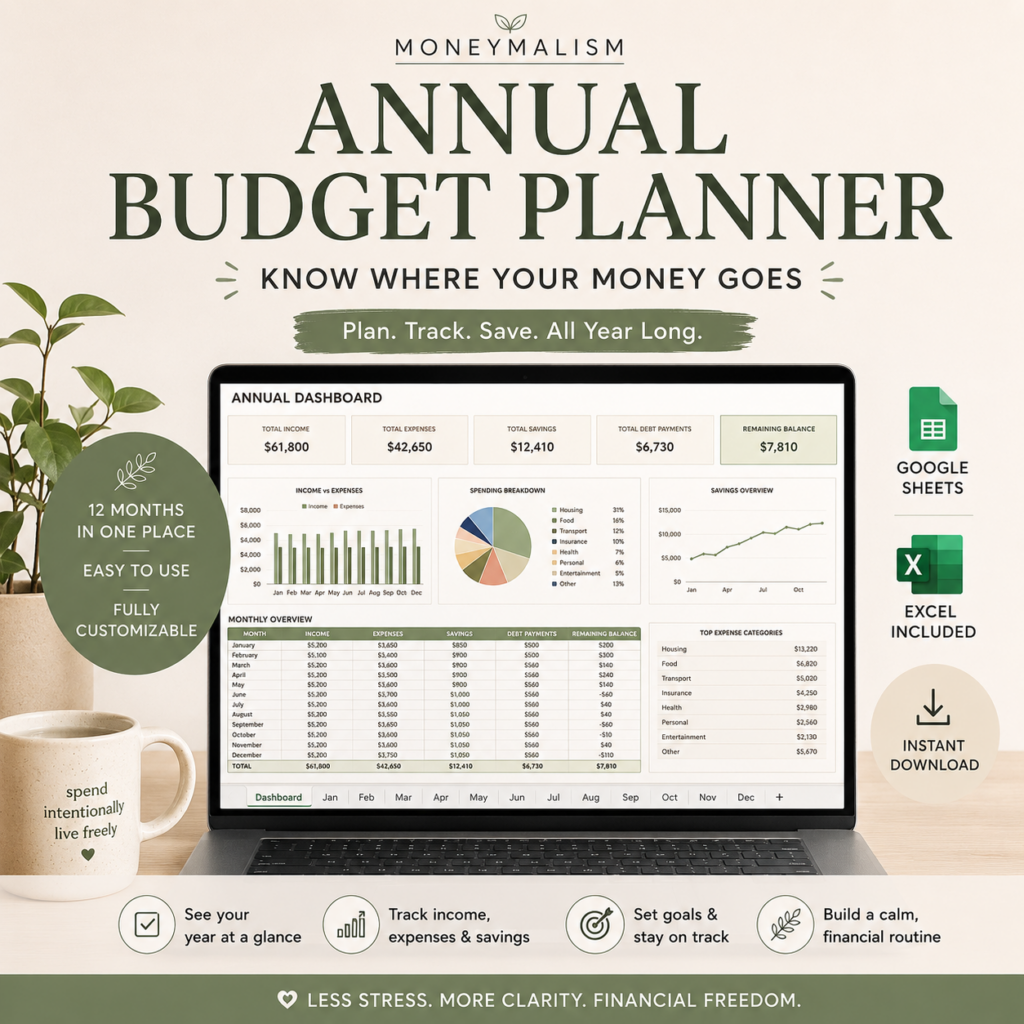
Know your numbers. Research your numbers. You can’t improve what you don’t measure. That’s actually one of the reasons I built my budget planner — not because writing numbers down is thrilling (it isn’t, and I was never a math whiz), but because clarity changes everything. Once you know exactly where your money comes from and where it goes, you stop making financial decisions based on assumptions. If your finances could use a little rearranging, feel free to check it out and start saving intentionally toward your dream.
Okay, So Where Do I Actually Start?
If I had to start completely over today, here’s exactly what I’d do:
Step one: know your numbers. Every single one — income, expenses, debt, savings, investments. No guessing, just facts.
Step two: spend intentionally and rein in lifestyle inflation. Not in some rigid, extreme way — that never sticks. But you have to get comfortable with having less, and with a bit of inconvenience. Suppress the impulse buys and get creative with what you already have. It’s not always fun, but it’s effective, because every dollar you don’t waste is buying your future freedom.
Step three: increase your income. Negotiate your salary, learn new skills, start a side hustle, switch jobs — invest in yourself. Saving matters, sure, but earning more accelerates everything. If you’re only making a thousand dollars a month, you can’t save your way to freedom on that alone — but boost your income, and suddenly the mid-range version of your dream becomes a lot more realistic.
Step four: invest consistently. Don’t be intimidated by investing — you don’t need perfect timing or the perfect strategy. All you need is time, and the best moment to start is now. Small amounts invested consistently over time always beat the “perfect” investment made too late. (Let me know if you’d want a separate post on exactly how we invested our way toward financial freedom.)
Step five: repeat. Over and over and over again. Personal finance is genuinely boring. You just need a plan and consistency. Commit for five years — not until Christmas, not until next month. Five years. Most people wildly overestimate what they can achieve in one year and massively underestimate what they can achieve in five. And ignore what everyone else is saying — other people’s opinions won’t buy you your future dream life.
If this gave you something to think about today, I’d genuinely appreciate it if you’d share it with someone who’s feeling stuck on the way to their big dream. And if you’re trying to get your finances — or your stuff — under control, that’s really what this whole blog is about: finance minimalism. Feel free to stick around, and I’ll see you in the next post.)
Wanna get your own budget under control? Then check out my Annual / Monthly Budget Planner Spreadsheet!