I know you’re hiding from the grocery prices. And honestly, I don’t blame you! Every time I open social media, I see another video of someone standing in a grocery store parking lot looking mildly traumatized after spending $300 on what appears to be three bags of food and half a watermelon.
And yes, grocery prices have gone up. A lot actually. But let me tell you: While food is definitely more expensive than it used to be, there are still plenty of ways to eat healthy without destroying your budget!
My breakfasts are still incredibly affordable. Most mornings, I’m spending less than a dollar per serving. Yes, you´ve heard me right! I can go through a whole month of breakfasts under 30$! They’re healthy, they’re filling, they’re easy to prepare, and unlike many boxed cereals, they don’t leave me hungry again thirty minutes later.
And the secret is….? Tadaaa: German grandma food, lol. Simple ingredients. Basic pantry staples. Lots of fiber. Plenty of protein. Nothing fancy. As a German living in the United States, I’ve noticed that many of our traditional breakfasts are surprisingly budget-friendly compared to what is often marketed as “healthy breakfast food” today.
So if you’re looking for cheap breakfast ideas, want to save money on groceries, or simply want to try something a little different, here are five German-inspired breakfasts that cost less than a dollar per serving and might just become part of your weekly routine.
First Things First: Let’s Go Grocery Shopping
My happy place in terms of grocery shopping DEFINITELY is Aldi. (Or Lidl, Lidl is also fine.)
I know that sounds ridiculous, but walking into an American Aldi genuinely feels more like home than almost anything else in this country. For a German, Aldi isn’t just a grocery store. It’s a lifestyle. Walking through those doors feels like getting a financial hug from your favorite aunt. And also moneywise: Where you shop matters. A lot!! I am always amazed by how people still go shopping at Publix or Whole Foods. I need my whole emotional support system to even enter those stores because they charge so much.
If you’re buying all your groceries at stores like Publix, Lowe’s Foods, or some of the more expensive supermarkets, you’re probably paying significantly more than you need to. I recently saw two packages of cheese costing around eleven dollars somewhere else. Meanwhile, I can walk into Aldi and get Swiss cheese for $1.99. And those differences add up quickly!
Ever since we started shopping primarily at Aldi and paying closer attention to our spending, our grocery budget has dropped dramatically. And that’s saying something because we’re a family of four. Not just any family of four. A family of four with two very hungry little boys who somehow act as if they’ve never been fed before every single time they enter the kitchen.
Yet despite that, we usually stay around $100 per week for groceries. That’s breakfast, lunch, dinner, snacks, everything.So before you tell me healthy food is too expensive, let me show you what we actually eat.
Why German Breakfasts Are So Cheap
Before we get into the recipes, I think it’s important to understand why so many traditional German breakfasts are naturally affordable. Most German breakfasts aren’t built around expensive ingredients.
They’re built around things like:
- Bread
- Oats
- Apples
- Carrots
- Yogurt
- Nuts
- Cheese
That’s basically it. We don´t use super trendy items or Acai-Puree from the other side of the world. Nothing that requires five specialty ingredients you’ll use once and then forget in the back of your pantry. It’s exactly the kind of food our grandparents ate because it was affordable, practical, and filling.
And funny enough, it’s still affordable, practical, and filling today. Which brings us to recipe number one.
Psst: If you are more the auiovisual type: I made a whole YouTube video with these recipes! So check it out (and don´t forget to subscribe ;)):
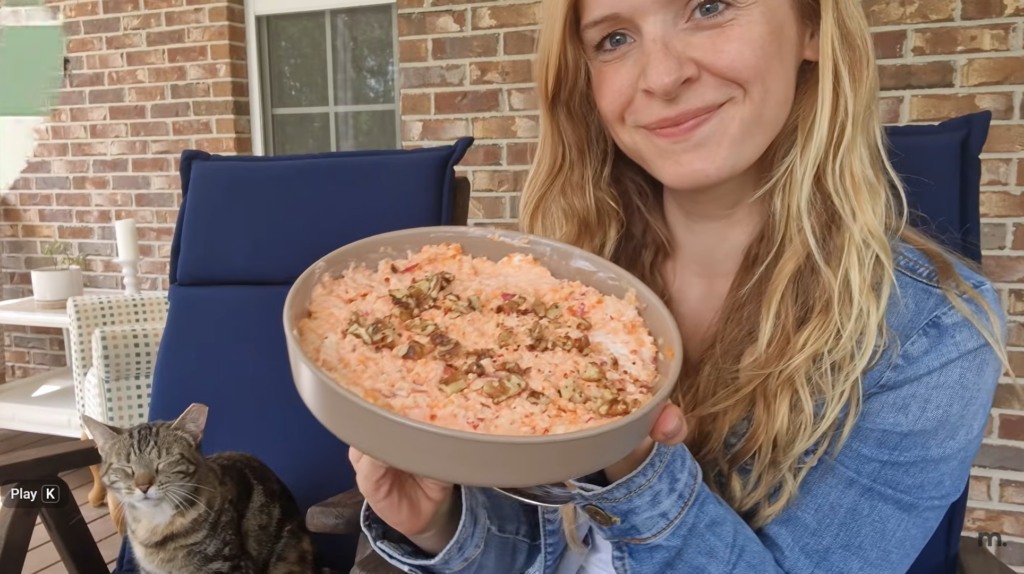
1. German Apple-Carrot Breakfast Bowl
This recipe is inspired by a classic German apple and carrot salad. If you’ve never combined apples and carrots before, I know it sounds a little strange. Trust me. It works.
For breakfast, I simply turn it into a more filling meal by adding yogurt and walnuts.
What You’ll Need
- 1 apple
- 1 carrot
- 200g Greek yogurt
- 1 teaspoon honey
- 1 handful of roasted walnuts
How To Make It
Grate the apple. Grate the carrot. Mix them together. Add a spoonful of honey. Stir in some Greek yogurt. Top everything with roasted walnuts. Done.
Why I Love It
The apples and carrots stay completely raw, which means you’re getting all that fiber and goodness without much effort.
It’s naturally sweet and incredibly filling. And it’s wonderful for gut health because of all the raw fibre! Also, can somebody please explain where Americans are hiding the “quark”? Because I’ve lived here for years now and I’m still searching. Greek yogurt is the closest substitute I’ve found, but if you know where I can buy proper quark in the United States, please let me know.
2. The German Open-Faced Breakfast Sandwich
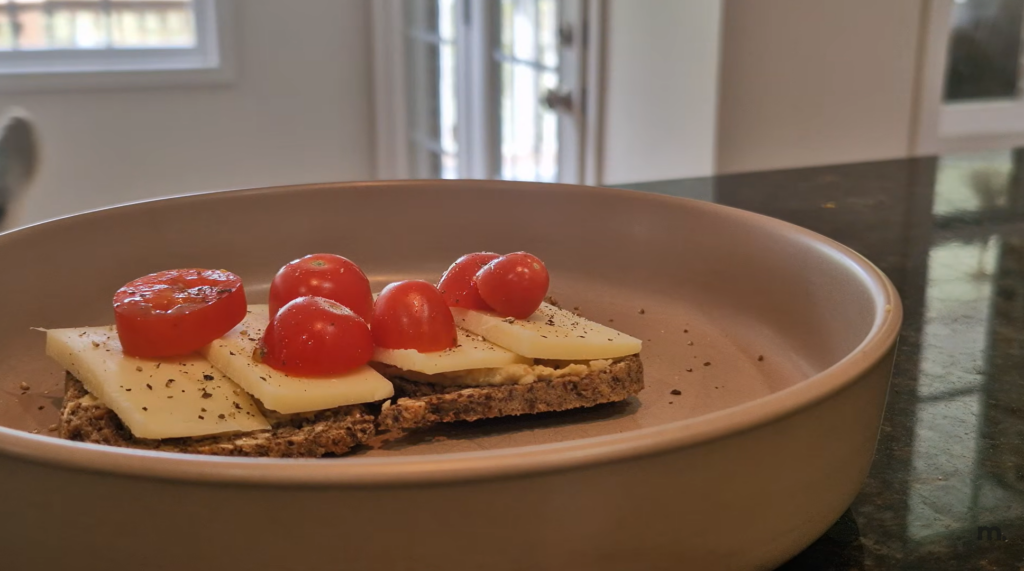
The next breakfast is probably the most German thing on this list: Bread. We Germans just love our bread 😀 And then some more bread. And then some bread with toppings. I know what you’re thinking. “Do Germans survive entirely on bread?”
Honestly? Some days it feels that way. My afternoon snack consists ridiculously often of a slice of sourdough bread with hummus, but there is a reason bread is such a staple food:
It’s affordable, and it´s incredibly versatile. And when paired with protein and vegetables, it’s surprisingly nutritious too! I usually bake my own whole-grain seed and nut bread or a sourdough bread because it’s cheaper and tastes amazing when toasted.
What You’ll Need
- Whole-grain bread
- Hummus, cream cheese, or butter
- Cheese
- Tomatoes or cucumbers
How To Make It
Toast the bread. Spread hummus, cream cheese, or butter on top. Add cheese. Add sliced tomatoes or cucumbers. Eat. That’s it. If you want something more substantial, simply add another slice of bread and turn it into a sandwich.
Why I Love It
This is my emergency breakfast. The breakfast I make when someone can’t find their shoes in the morning or when I am just short on time but still don´t wanna opt out of my overall (okay, like 70% of the time) healthy diet. In other words: every weekday morning.
It’s fast, filling, and keeps me going for hours.
3. Savory “Poor Knights” (German French Toast aka “Arme Ritter”)
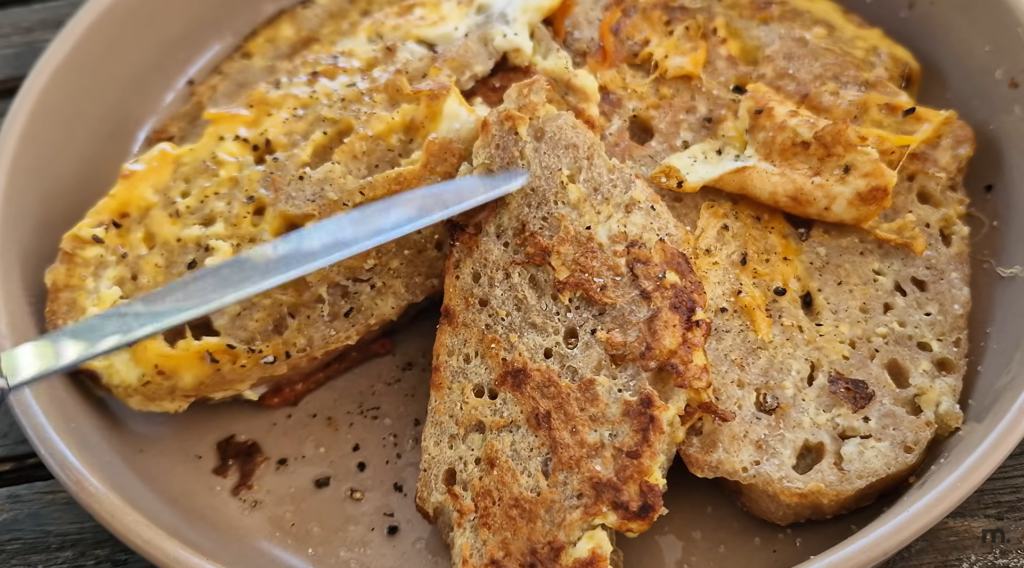
The third breakfast is called “Arme Ritter” which means literally translated “Poor Knights.” Not poor nights. Poor knights. As in the medieval guys riding around on horses. Don’t ask me why. I honestly need to research that myself someday. What I do know is that it’s delicious. Most people make it as a sweet dish but I don´t, because I’m simply not a sweet breakfast person. Give me cheese over pancakes any day (I mean I love pancakes, but only on Sundays, the other 6 days I need a savory breakfast.)
What You’ll Need
- A couple of slices older, stale bread
- 1 egg
- 100ml of Milk
- A handful of grated cheese
How To Make It
Mix the egg and milk together in a wide bowl, so the egg dissolves in the milk. Dip the bread into the mixture and let it soak through. Fry it in a little bit of oil in a pan until golden brown. Add the cheese on top. Put the lid on the pan and let the cheese melt.
Why I Love It
This recipe is a perfect example of old-fashioned frugal cooking. Nothing gets wasted – the older, stale bread nobody wanted anymore still becomes breakfast, just in another way! Simple ingredients become something special and the total cost is incredibly low. You don´t always have to buy cheaper food, sometimes it´s rather about wasting less of the food you already have.
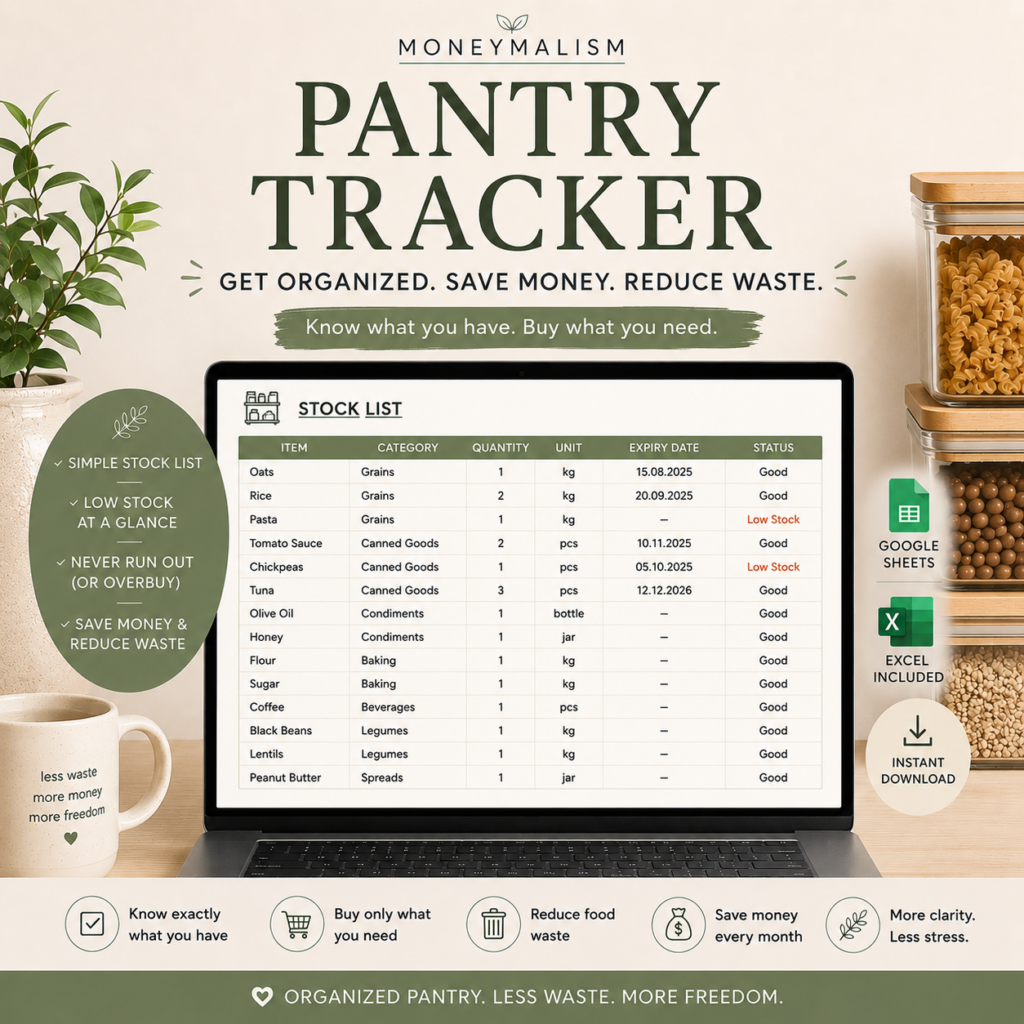
Speaking about food waste: Are you struggling with valuing your food? Do you throw away too much and waste too much on unneccessary purchases and food that has gone back in the back of your fridge? Check my pantry tracker out! It helps you stay on track and to avoid food waste.
4. Homemade Granola That Beats Expensive Boxed Cereals
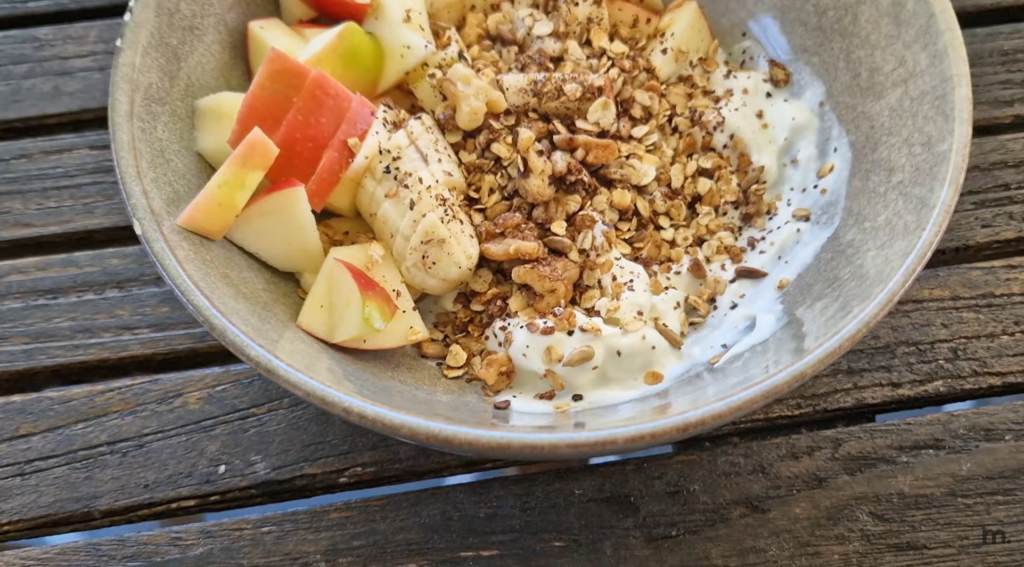
Can we pleaaase talk about cereal prices for a second? Because some of them are absolutely wild! A small box can easily cost five, six, or even seven dollars. And it´s not even “good” food with all the sugar and artificial colours in it! Meanwhile, homemade granola costs a fraction of that. Every other week, I make a large batch that lasts us for multiple breakfasts.
What You’ll Need
- 200g Oats
- 200g Mixed nuts, chopped
- 1 Tablespoon of Nut butter
- 1 Tablespoon of Honey or maple syrup
- a pinch of cinnamon if you like it (I love it)
How To Make It
Toast the oats and nuts without oil in a pan. Add the nut butter and the honey. Mix everything together and let it simmer and fry for a minute, until everything is golden brown. Let it cool down (it gets crispy when it cools down) and store it in a container. We usually eat it with Greek yogurt, Apples or bananas. Just simple and affordable but still delicious!
Why I Love It
Unlike many breakfast cereals, this actually keeps me full. The combination of fiber, protein, and healthy fats makes a huge difference. And because you’re making it yourself, you know exactly what’s inside. It contaisn no mystery ingredients or unneccessary additives and is super cheap!
5. Bircher Muesli: The Original Overnight Oats
For our final breakfast, we’re leaving Germany for a moment and heading to Switzerland. Although honestly, plenty of Germans eat this regularly too (and we share more or less the same language, so I kind of still count it as a German breakfast).
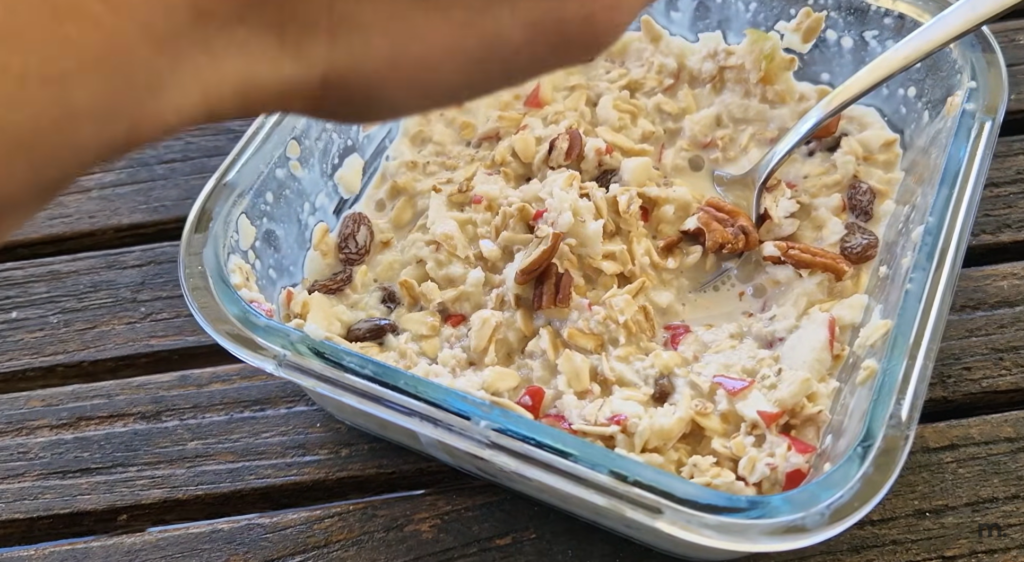
Bircher Muesli is basically the original “overnight oats”. Long before overnight oats became trendy on Instagram, people were already making Bircher Muesli!
What You’ll Need
- 100g Oats
- 1 small Grated apple
- 100g Yogurt
- 50ml Milk
- 1 teaspoon Honey
- 20g of Raisins or cranberries
- 20g of roasted walnuts
How To Make It
Put everything into a jar, close the lid and shake it really well. Place the jar in the refrigerator overnight. That’s it! You can top it with the nuts the next morning if you prefer them to be super crunchy, but they taste great when you mix them right into the jar also! It might not lok like a Michelin-Star recipe, but it will keep you full, satisfied and healthy, I promise!
Why I Love It
I usually prepare several jars at once, because it´s so easy to prep. And because I hate throwing things away, I often reuse old pickle jars instead of buying special containers. The raisins soften overnight and naturally sweeten everything. If I don’t have raisins, I use dried cranberries. I don’t know many breakfasts that are healthier, cheaper, or easier than this, so definitely try it!
Final Thoughts: Grandma Was Right
If you’ve never tried German breakfasts before, they might feel a little different at first, especially if you’re used to sugary cereals, pancakes, waffles, or breakfast pastries. But I promise they’re worth trying, because at the end of the day, these recipes all have a few things in common: They’re simple, affordable and filling. Plus they often rely on ingredients that most of us already have at home!
The funny thing is that what we now call “budget-friendly eating” was simply everyday life for our grandparents. And they definitely weren’t trying to be frugal influencers. They were just making practical meals from affordable ingredients.
And somehow they figured out a lot of things we’ve forgotten. So if grocery prices have been stressing you out lately, maybe the answer isn’t another complicated budgeting hack. Maybe it’s just a grated apple, some oats, a piece of bread, and a little bit of German grandma wisdom.
And that has worked pretty well for me so far.