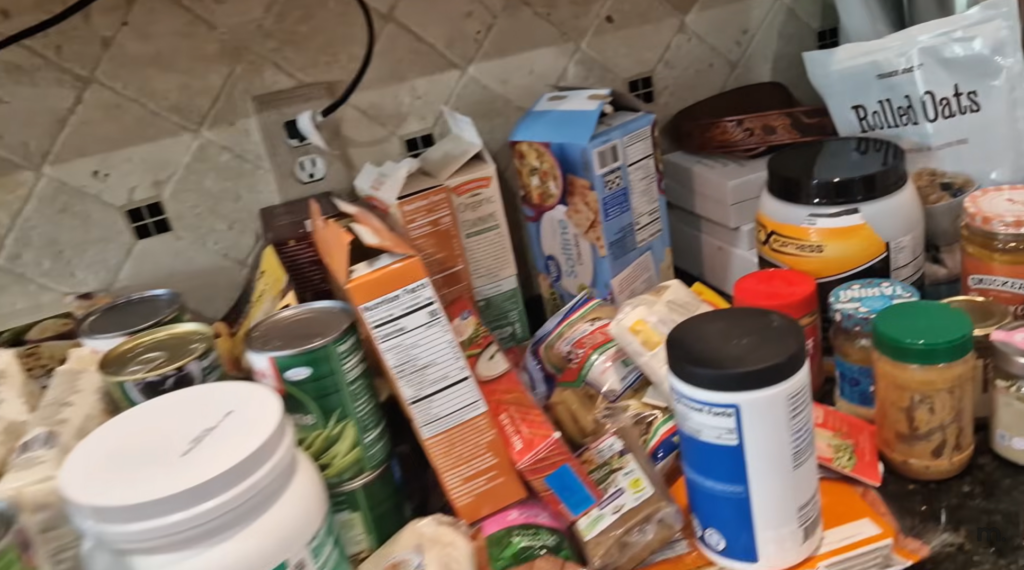
I have an embarrassing $400 worth of food sitting in my pantry right now. And chances are pretty high that your pantry looks much the same.
The average American wastes around $1,500 a year on food – mostly because of bad planning and overbuying. If you’re feeling the pressure of rising grocery costs and you care about saving money, building smarter systems for your home, and running your life a little more efficiently – keep reading. Because I’m German, and efficiency is basically my whole personality.
Let Me Show You Something Slightly Embarrassing
My pantry was a mess. Glass containers I couldn’t see into. More coffee, honey, spices, and tea than any one family needs. And then there’s the fridge. I won’t go into full detail, but let’s just say it was not tolerable. My husband puts his stuff somewhere, I put my stuff somewhere, and nobody has any idea what’s actually in there.
Even though I consider myself a minimalist, life happens. My husband is a pretty enthusiastic impulse shopper. I tell him before he goes to the grocery store: “We have five cans of corn, please don’t buy corn.” He comes home with another can of corn. Every time.
And honestly? I have to admit I haven’t been the strictest shopper either lately. Between working full-time, running my YouTube channel, raising two small kids, and navigating life in a foreign country – grocery management slipped. I know I can do better, because I did it before back in Germany. I had a fully organized pantry, fridge, and freezer, and I wanted to get back to that.
Why This Actually Matters Financially
Food is, next to rent, the biggest recurring expense in our household every single month. That means bad habits in this area add up fast. Every week, money goes into groceries. Every small mistake compounds over time. What looks like a few wasted dollars here and there can turn into a really immense amount over the course of a year. $1,500 is not nothing – that’s a vacation, a car repair, or months of savings.
The real problem isn’t that we waste money at the store. We waste it at home – because we don’t have a system. We buy duplicates without realizing it. We forget what’s in the back of the cabinet. We let fresh produce die quietly in the crisper drawer. And then we throw it all away and go buy more.
So let´s start and see what we can do about messy pantries!
Step One: Take Everything Out
The first step is simple but uncomfortable: pull everything out so you can actually see what you have. Only then can you decide how to organize it, what meals you can make from what you already own, and what genuinely needs to go.
I don’t like throwing things away – if you’ve seen my decluttering video about the German method, you already know that. So the goal is to find a purpose for every single item. As long as something still has value, we’re going to use it. The only exceptions are things that are truly no longer edible. But canned foods close to expiring? Fresh things that can be turned into a meal? All of it gets repurposed before it gets tossed.
When I pulled everything out of my pantry, fridge, and freezer, I was genuinely shocked. All of this had accumulated in just six months – we moved into this house half a year ago and did a full pantry clean-out before the move. Six months. It was insane.
The Pantry Tracker – My New Favorite System
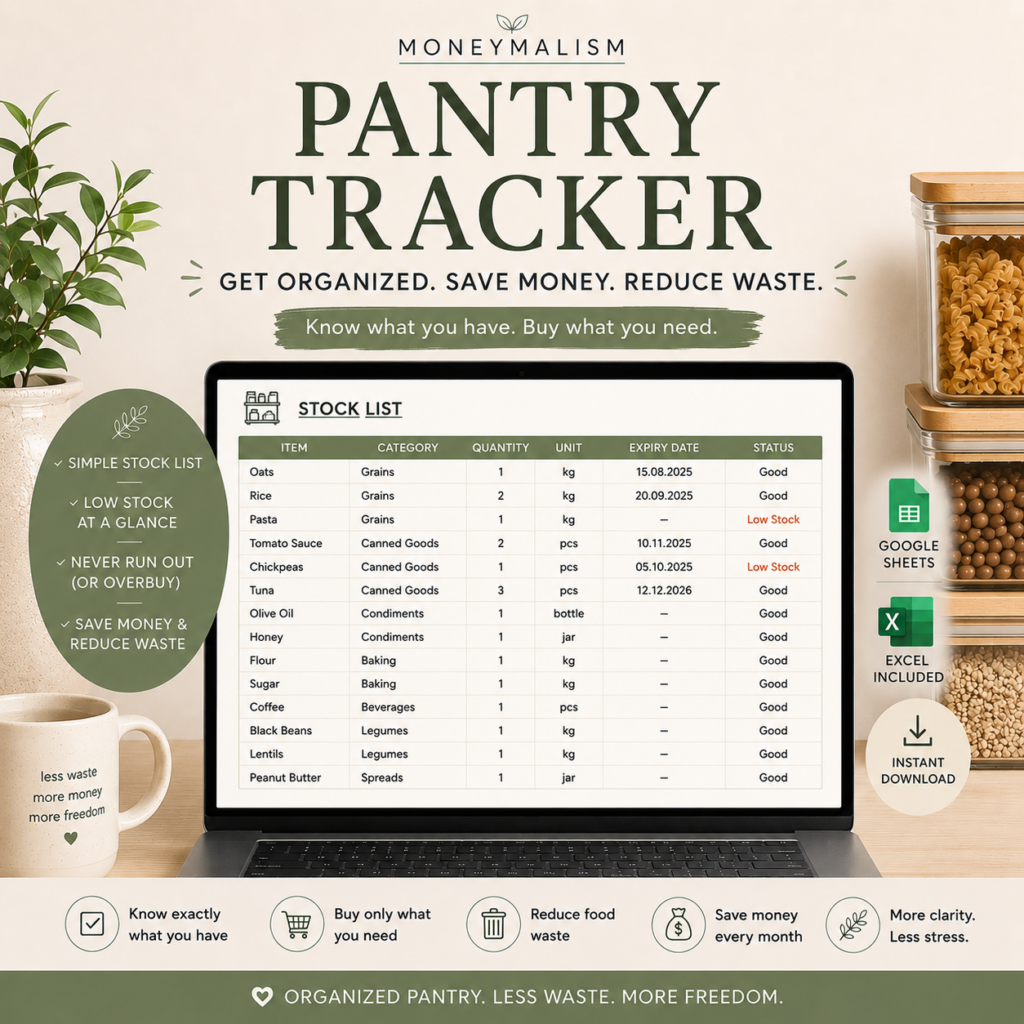
I’ve been working on a pantry tracker for the last two weeks, and I have to say: it’s calling me out on every single bad habit. I can see all the duplicates. Why do I have this much flour? This much pasta? And I found canned goods close to expiring – which, if you know anything about canned food, is really hard to do.
Here’s how the tracker works. There are four tabs:
1. Stock Tracker This is where you log everything you have. Item name, quantity, expiry date. The tracker calculates how many days are left before something goes bad.
2. Shopping List When an item runs low or gets marked as consumed, it automatically appears on the shopping list. No more guessing at the store. No more buying a fifth can of corn.
3. Waste Tracker If something gets thrown away, it gets greyed out and logged as waste. Over time, the tracker calculates exactly how much value you’ve thrown away each month. This number will shock you. It shocked me.
4. Available for Cooking Everything currently in stock and ready to use shows up here. And here’s my favorite part: copy this list, paste it into ChatGPT, and ask it to suggest meals based on what you have. No more standing in the kitchen at 6pm wondering what to cook. You already have the ingredients – you just needed someone to do the creative thinking for you.
Are you struggling with valuing your food? Do you throw away too much and waste too much on unneccessary purchases and food that has gone back in the back of your fridge? Check my pantry tracker out! It helps you stay on track and to avoid food waste.
The ChatGPT Trick That Makes Meal Planning Easy
I know a lot of us struggle with that daily question: What are we eating tonight? What do I still need to buy? What does my family actually like?
Once your pantry tracker is up to date, you just copy your available ingredients, drop them into ChatGPT, and ask for meal suggestions. It handles the creative part. You handle the cooking. And you end up feeding your family healthy, balanced meals from things you already bought and already own – instead of letting them expire while you order takeout.
Yes, the Initial Setup Takes Time
I’ll be honest: getting everything out, wiping down the shelves, logging every item, and putting it all back took me about two hours. That’s not nothing. But the ongoing maintenance? Five minutes when you get back from the grocery store. A quick update when you throw something away. That’s it.
If you invest one hour a month in maintaining this tracker and it saves you even $200 a month in wasted food – that’s money you’re simply not throwing away anymore. Plus you’ll probably eat better in the process.
You can sort items by expiration date so the things expiring soonest show up at the top. You can share the spreadsheet with your partner or roommates so everyone knows what’s in stock. You can even add household items like toilet paper or cleaning supplies. It’s one place for everything.
What I Actually Found (The Honest Version)
When I cleaned out the fridge, I found some really old feta cheese hiding in a Tupperware container in the back. Completely forgotten. Had to throw it away.
And that’s exactly the problem: if you can’t see it, you won’t use it. The fridge was full, but organized chaos means nothing is actually visible, nothing gets used, and everything quietly goes bad. I was genuinely mad at myself – someone put real effort into making that feta cheese, and I just wasted it. The pantry tracker exists precisely to prevent moments like that from happening again.
This Isn’t About Perfection
You don’t need to be precise to the gram. I was eyeballing everything – roughly half a jar of cashew butter, about two cups of rice left, something like that. The tracker doesn’t need to be perfect to be useful. It just needs to give you a clear enough picture that you stop buying things you already have and start using what you already bought.
This whole process isn’t about becoming some kind of perfect, hyper-organized person. It’s about reducing waste, getting more value out of what you’ve already spent money on, and building a simple system that actually sticks.
A System Problem, Not a Motivation Problem
If your kitchen always feels full but you still don’t know what to cook – that’s not a motivation problem. That’s a system problem.
It’s honestly the same as the closet situation: we all say “I have nothing to wear” while staring at a full closet, because we can’t actually see what we have anymore. The pantry is the same. The fridge is the same. Once you have a system, the problem mostly solves itself.
Simple, effective, and frugal. Pretty German, if you ask me.
If you want to try this yourself, you can either build your own tracker or download mine – I’ll link it below. And if you want more systems like this that simplify your life and quietly save you money, make sure to subscribe. See you in the next one! 🥖
Are you struggling with valuing your food? Do you throw away too much and waste too much on unneccessary purchases and food that has gone back in the back of your fridge? Check my pantry tracker out! It helps you stay on track and to avoid food waste.