Germans might be the most boring people on earth. And I say that as someone who was born and raised in northern Germany, by German parents and German grandparents. But here’s the thing: we are also really, really good at building wealth and living a simple life.
While the rest of the world is drowning in debt, clutter, overconsumption, and impulse purchases, Germans are quietly saving more than almost anyone else – with nothing but discipline and consistency. We might not be the inventors of the Hakuna Matata philosophy, and we will never be the coolest people in the room. But we are insanely good at not being broke.
What if being boring and efficient is actually the secret to saving thousands of dollars – or euros – a year?
How I Realized German Habits Are Not Normal
I grew up in Germany thinking our habits were pretty much the same as everyone else’s. Doesn’t everyone pack their own lunch for a day trip? Doesn’t everyone wait a week before buying something they want? Doesn’t everyone have a savings account from age seven?
It wasn’t until I moved to the US that I realized: no. Not everyone lives this way. And those habits I had taken completely for granted were actually making my life easier, more affordable, and a lot more stress-free than I had ever appreciated.
Some of these habits take discipline. Some of them will hurt a little. But I genuinely believe they are worth it. Here are all 24 of them.
1. Pay With Cash
Germans are famously cash-heavy. Many restaurants and shops don’t even offer card or tap payments – you simply have to pay with cash. And studies show that people tend to spend around 30% less when they physically hand over money rather than swiping a card.
Try it for one week. You will feel exactly how much it hurts to watch money leave your wallet. My American friends always tease me about carrying cash, but I genuinely feel every euro – or dollar – I spend. That feeling is a feature, not a bug. And as a bonus: cash can’t be tracked, so you protect your privacy at the same time.
2. The Delayed Gratification List
Germans are not particularly known for being emotional, and that’s exactly why we’re so good at not impulse buying. We suppress the urge. We wait. There’s a German saying: “Gut Ding will Weile haben” – good things take time.
Before any purchase I feel the impulse to make, I put it on a list and wait. Sometimes a day, sometimes a week, sometimes a month or longer. And sometimes I simply forget about it – which means I end up not buying it at all. Try keeping a delayed gratification list. You’ll be surprised how many things on it stop feeling necessary after a little time passes.
3. No-Consumption Sunday
Almost everything in Germany is closed on Sundays. At first that sounds incredibly annoying, and yes – I did appreciate being able to pop into Walmart at 6am on a Sunday here in the US when I forgot something for breakfast. But what Sundays without shopping actually do is remove one full day a week from your possible consumption days. It’s a built-in reset.
You’re forced to rest. Forced to live with what you already have. You can’t buy anything in a shop – you just have to slow down. Even if your stores are open on Sundays, try doing a voluntary no-consumption Sunday: turn off your phone, turn off the internet, go for a walk. In Germany we call it a Sonntagsspaziergang – a Sunday walk. It costs nothing and does a lot for your nervous system.

4. Debt Is Not Normal
Germans are deeply skeptical of debt. Getting into consumer debt for everyday purchases – even something like a TV – is genuinely frowned upon. Credit card debt carries a quiet social stigma. If you can’t afford it right now, you simply don’t buy it.
One of my earliest memories is going with my dad to our local Sparkasse – the local bank – to open my very first savings account when I was seven years old. From age five or six, I was taught to save my pocket money. If I wanted something, I saved for it. Borrowing money from my parents was never an option. Debt was never normalized, and it was always treated as irrational. That framing stuck with me for life.
5. Compare Everything Before You Buy
Before any significant purchase, Germans will check every comparison website, read 20 reviews, compare every price variation, and set price alerts. Tools and browser extensions that track price history make this easy today – I have an extension that tells me instantly if I can find the same item cheaper elsewhere.
You don’t have to do this for every single purchase. But for anything over $50 or so, it’s absolutely worth checking other websites and searching for a discount code. It takes five minutes and can save you real money.
6. “We Still Have Food at Home”
If you grew up in Germany, you know this phrase. German parents will almost always say “we still have bread at home” instead of stopping at McDonald’s on a family outing. There’s always an apple at the bottom of the bag, always yesterday’s leftovers packed in a container, always Butterbrote – little sandwiches – wrapped up for the trip.
Packing your own food for a day out instead of eating at restaurants can reduce your costs immensely. It doesn’t feel like a sacrifice. It’s just what you do.

7. Ditch the Single-Use Items
I would love to say we don’t judge people for using disposable plates, cups, and cutlery at home. But we do. Myself included. Sorry.
Not just because it’s bad for the environment, but because you are literally throwing money away every single time. Invest in a good set of dishes and real silverware. You’ll probably use them infinitely, they pay for themselves within a year, and your dinners will feel a lot more like actual dinners.
8. No Lifestyle Inflation
When Germans get a raise, the default is not to immediately get a bigger apartment, a nicer car, or a more expensive wardrobe. We do the opposite of keeping up with the Joneses – especially in the north of Germany, showing off your lifestyle with flashy purchases is actually considered a bit posh, a bit much.
The default is to increase your savings, increase your buffer for schlechte Zeiten – the bad times. Lifestyle inflation is treated with genuine suspicion. The raise goes into the safety net, not the shopping cart.
9. Aldi and Lidl Are Not a Compromise
Two of the world’s most efficient and successful grocery companies are German. And we shop there proudly. Most Germans don’t really care about brands – we care about quality. And in Germany, you can actually look up which facility produced a product. Very often, the no-brand version was made in exactly the same factory as the premium branded one.
We love Gut & Günstig – roughly the equivalent of Walmart’s Great Value brand. As long as it feeds your family and the quality is good, it goes in the basket. That’s it.
10. Buy Seasonal Produce
I grew up buying enormous amounts of strawberries during strawberry season – and then absolutely no strawberries from June until the following year. Because buying strawberries in December means paying a lot of money for something that doesn’t even taste good.
Germany has wonderful local farmers’ markets with incredibly cheap seasonal produce. Many of us also love to collect what nature offers for free – in our region there’s Bärlauch, a wild garlic you can find in the woods in spring, perfect for pesto. In fall, people collect mushrooms. Eating with the seasons saves money and, honestly, the food tastes so much better.
11. “Abendbrot” Is a Real Dinner
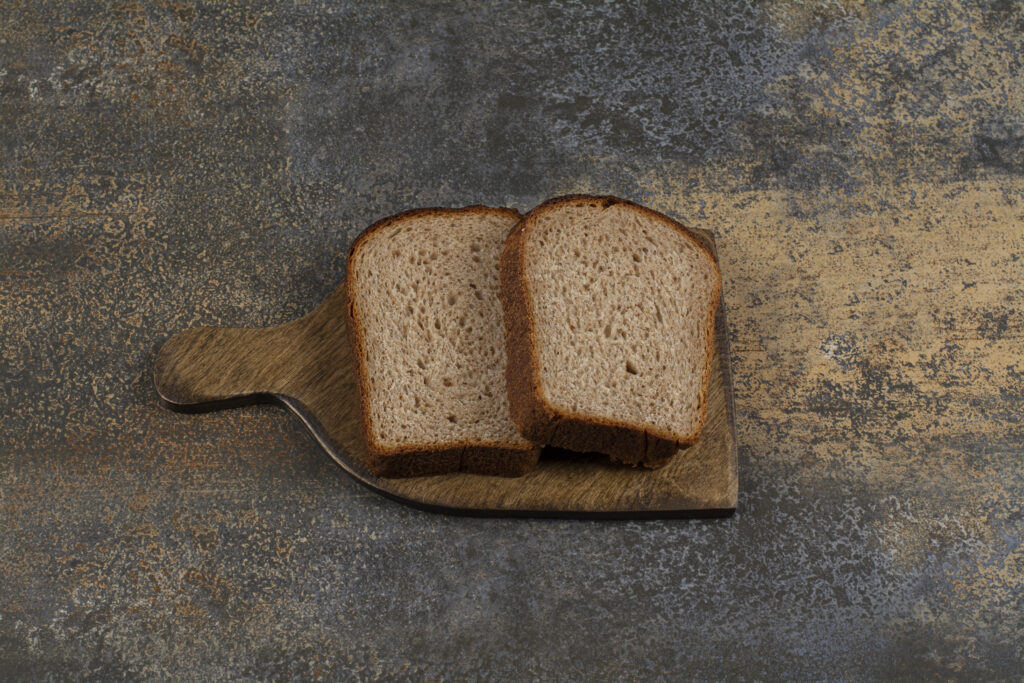
Germany has over 3,000 varieties of bread. And on evenings when I really don’t want to cook, I remember: I’m German. I can just do Abendbrot. A slice of bread, some butter, a bit of cheese, maybe some pickles or tomatoes. That is a completely valid, fully accepted family dinner. It costs almost nothing, takes three minutes to prepare, and nobody complains.
12. The Sunday Leftover Feast
My mom had a Sunday tradition she called Restessen – leftover feast. She would take everything that was left in the fridge, throw it into a casserole dish, top it with cheese, and bake it. Those meals were often some of the best because they were improvised and always different. Nothing was wasted, the fridge was cleared out, and everyone was happy. It’s a habit that saved a significant amount of money every single month.
13. Filter Your Tap Water Instead of Buying Bottles
Germany has some of the cleanest tap water in the world, and we drink it. Buying bottled water when tap water is perfectly fine just doesn’t make sense.
Here in the US, I bought a water filter because the tap water is quite heavy on chlorine. It cost me around $200 upfront, but it will absolutely pay for itself over time – no more plastic waste at home, no more hauling heavy bottles, no more spending money on plain water.
Wanna get your own budget under control? Then check out my Annual / Monthly Budget Planner Spreadsheet!

14. Smaller Homes Mean More Freedom
The average German home is significantly smaller than the average American home. And it’s completely normal to rent a smaller apartment even when you have a family of three or four people, especially in cities. Less space means less stuff to fill it, less time cleaning it, and often a closer family life.
Smaller is not considered a downgrade in Germany. It’s considered more freedom.
15. Repair Before You Replace
My grandparents always asked: is this really broken, or can I fix it? German cities even have Repair Cafés – places where people with different skills meet up and help each other fix things. Watches, tools, electronics, clothing.
If you have a quality item, it almost always makes more sense to spend $10 or $20 repairing it than to spend $80 on a new one of lower quality. The repair mindset extends the life of good things and keeps money in your pocket.
16. Turn Off the Lights
The first thing you learn as a German child: turn off the light when you leave a room. Never let the water run while you’re brushing your teeth or washing your hair. Energy is very expensive in Europe, so we monitor our consumption closely – not just for the bill, but for the environment too.
It’s a small habit, but small habits compounded over years add up to real money.
17. Love Your Multi-Purpose Tools
I think every German grandfather carries a Swiss army knife. One tool, infinite uses. And then there’s the famous Jutebeutel – the canvas tote bag – which somehow evolved from a simple grocery bag into a genuine fashion item. You take it grocery shopping, you pack your lunch in it, you bring it to a concert. One item, many purposes. Less clutter, less spending, simpler life.
18. Dress for Quality and Function, Not Trends
Most Germans don’t really follow fashion trends. The typical approach is quality pieces in basic, neutral colors that are practical and do their job well. You develop a personal baseline for your style and stick with it – which is actually incredibly freeing because you stop worrying about whether you’re trendy enough. Nobody is judging you for that.
My parents always taught me to think in cost per wear. A jacket that costs €100 but lasts 10 years and gets worn 200 times is a far better investment than a €20 jacket that falls apart after two wears. Fewer things, better things.

19. Share and Borrow Instead of Owning Everything
I grew up in a small village where our neighbor had a large tent they used once a year – and everyone in the neighborhood could borrow it. We had a shared trailer for the whole street. You pay a fraction of the cost, you own less stuff, and it genuinely strengthens real human connection.
Maybe you don’t need to own everything. A joint purchase with a neighbor or friend you trust can work beautifully – and it’s one more reason to actually talk to the people around you.
20. Dates Don’t Have to Cost a Fortune
A completely solid and valid date is a picnic in the park or a walk around a lake. My first date with my husband was a walk around a lake followed by a coffee. That’s it. You don’t have to take someone to an exclusive restaurant to show them you care.
And honestly? If you love living simply and saving money, and the person you’re dating can only express love through expensive restaurants and material things – that might just be an incompatibility worth knowing about early.
21. Value Resources – Without Hoarding
A lot of us Germans grew up with parents or grandparents who lived through the post-WWII period, when resources were genuinely scarce. That generation saved everything, valued everything, wasted nothing. Cutting open tubes to get the last bit out. Wearing clothes until they fell apart.
We don’t need to go that far – frugalism and minimalism sometimes clash, and hoarding clutter defeats the purpose. But the underlying mindset of appreciating the resources and effort behind the things we own? That part is worth keeping.
22. Say No Without Guilt
Germans are generally not afraid to say no. Declining plans, projects, or purchases that don’t serve your goals or your values is not considered rude here – it’s considered clear and respectful. As long as you communicate it politely and directly, it’s completely fine.
Saying no to the things that don’t fit creates space for the things that do. More time, more money, more energy for what actually matters to you.
23. Second-Hand Is Completely Normal
Buying second-hand is absolutely fine for most Germans and carries zero stigma. We love our Flohmarkt – flea markets. Even giving second-hand gifts has become increasingly accepted. If you received something for a birthday or Christmas that you genuinely don’t need and it’s still in perfect condition, it’s completely fine to pass it on to someone who will actually use it. Giving something a second life is not cheap – it’s sensible.
24. Buy Less, Buy Better
“Wer billig kauft, kauft zweimal” – if you buy cheap, you buy twice. This saying is so deeply embedded in German culture that it genuinely shapes how we shop. We buy fewer things, but we buy better things. One really good winter jacket instead of three mediocre ones. A few excellent knives instead of a full block of forgettable ones.
The result is that you actually end up spending less over time, and you enjoy the things you own for much longer.
This Isn’t About Being Strict With Every Purchase
Some of these habits might already be completely natural to you. Others might feel uncomfortable at first. That’s okay – discipline isn’t always easy, but it gets easier.
The goal isn’t to be rigid or joyless about money. It’s to build a life where you own your time, your finances, and your boundaries – rather than the other way around. A life where you’re not one emergency away from chaos, not constantly pressured to buy things you don’t need, and not exhausted from maintaining stuff that doesn’t bring you joy.
German discipline, stability, and consistency aren’t glamorous. But they work. And quietly, steadily, they add up to a lot.
If any of this resonated with you, I’d love to know – drop a comment with which habit you’re going to try first, or share a money-saving habit from your own culture. I always love hearing from you.