
Recently I realized something slightly uncomfortable about myself. I’m not actually a real minimalist. Instead, I’m more of a moderate frugalist who enjoys reorganizing, repurposing, and occasionally doing a good declutter session. And honestly, I think a lot of people are in the same situation.
Many of us want less stuff in our homes because we want to save time, save money, and create a calmer living environment. But somewhere along the way, we start to confuse minimalism with frugalism.
And the truth is: those two philosophies often fight each other. Minimalism basically says: Own less. Frugalism says: If something still has value, maybe you should keep it. So today I want to show you how I try to find a balance between minimalism and frugal living using what I like to call the German Decluttering Method. I’ll walk you through this method step by step while I declutter my house and explain why this approach works so well for people who want to live frugally without throwing away useful things.
You prefer videos? Here is my YouTube video about this topic 🙂
Minimalism vs Frugalism: Why They Often Clash
After watching countless decluttering videos and doing many decluttering sessions myself, I started to notice something interesting. Most decluttering advice follows a very emotional approach. People ask themselves questions like: Does this spark joy? This idea became extremely popular through minimalist culture.
But for me, that question never felt completely right. Because many things in our homes don’t spark joy – but they are still useful. For example, let’s take something simple from my kitchen. A can opener. Does my can opener spark joy? Probably not. But do I need it? Absolutely.
It makes my life easier, saves me time, and allows me to cook efficiently. So the German approach to decluttering is usually less emotional and more practical. Instead of asking whether something sparks joy, we ask: Does this item still have a job? Is it still working? Does it support my life in a practical way?
That difference changes the entire decluttering process.
The German Decluttering Method
The German method is based on three main questions.
Instead of focusing on emotions, it focuses on function, efficiency, and realistic lifestyle needs.
Let’s go through them step by step.
Question 1: Does This Item Still Have a Function?
The first question I always ask myself during decluttering is very simple: Does this item currently have a function in my life? And if the answer is yes, the next step is even more important. Can I clearly name that function? Not in a future fantasy life. Not in some imaginary Pinterest version of myself. It has to be a real function in my current life.
If I haven’t used an item in years and cannot name a realistic situation where I use it, that already tells me something. When decluttering, I always remind myself of one rule: Declutter for your real life, not your fantasy life. Many people keep items because they represent the person they want to become, not the person they actually are. And that’s how clutter slowly builds up.
The Gift Dilemma: A Frugalist Problem
Sometimes minimalism and frugalism really clash. A perfect example is gifts. In one of my cabinets, I keep several birthday and Christmas gifts we received but never really needed. A minimalist would probably say: Get rid of them immediately. But my frugal brain says something different.
Maybe someone else could use them. Maybe we can regift them later. That would save money in the future. So even though those items take up space, they still serve a financial function.
And because of that, they stay – at least for now.
The Technical Drawer Problem
Another classic challenge in many households is the mystery electronics box. You know the one. Chargers, cables, adapters – half of them belong to devices you don’t even remember anymore.
This is one of the few areas where I often wait before decluttering. Why? Because if I throw away the wrong charger, I might regret it later. So sometimes the smartest decision is simply to delay the decision until someone who understands the technology better can help. Decluttering should make life easier, not create new problems.
Question 2: Can This Item Be Repurposed?
The second question comes into play when an item doesn’t currently have a function anymore, but might still have value. This is where frugal thinking becomes very helpful. If an item has realistic potential to be repurposed, it might deserve a second life. For example, when my son outgrew his baby nests, I didn’t immediately throw them away. Instead, I turned them into cat beds. They are now perfectly comfortable sleeping spots for our cats.
Another example is children’s bibs. Once kids stop using them, they often end up in storage. But instead of throwing them away, they can easily be cut and used as cleaning cloths for the kitchen. This approach saves money and reduces waste. However, there is one important rule.
The Repurpose Time Limit Rule
If you plan to repurpose something, you need to set a time limit. Give yourself a realistic timeframe. Three months. Maybe six months at maximum. If you haven’t repurposed the item during that time, two things are likely true: The original function was not important enough. The repurposed function was also not important enough. And if both are true, then the item can finally leave your home.
Question 3: Does This Make My Life Easier?
The third question is my personal favorite. Does this item make my life easier, more functional, or more efficient? Many households are not overwhelmed because they lack organization. They are overwhelmed because they have too many options.
Too many clothes.
Too many kitchen tools.
Too many beauty products.
Every additional item creates more decisions and more maintenance. Minimalism sometimes pushes people too far in the opposite direction. I’ve experienced that myself. If you declutter too aggressively, your home can actually become uncomfortable. You still need tools, comfort items, and practical things.
The goal is not to own the fewest possible items. The goal is to own the right items.
The Real Purpose of Decluttering
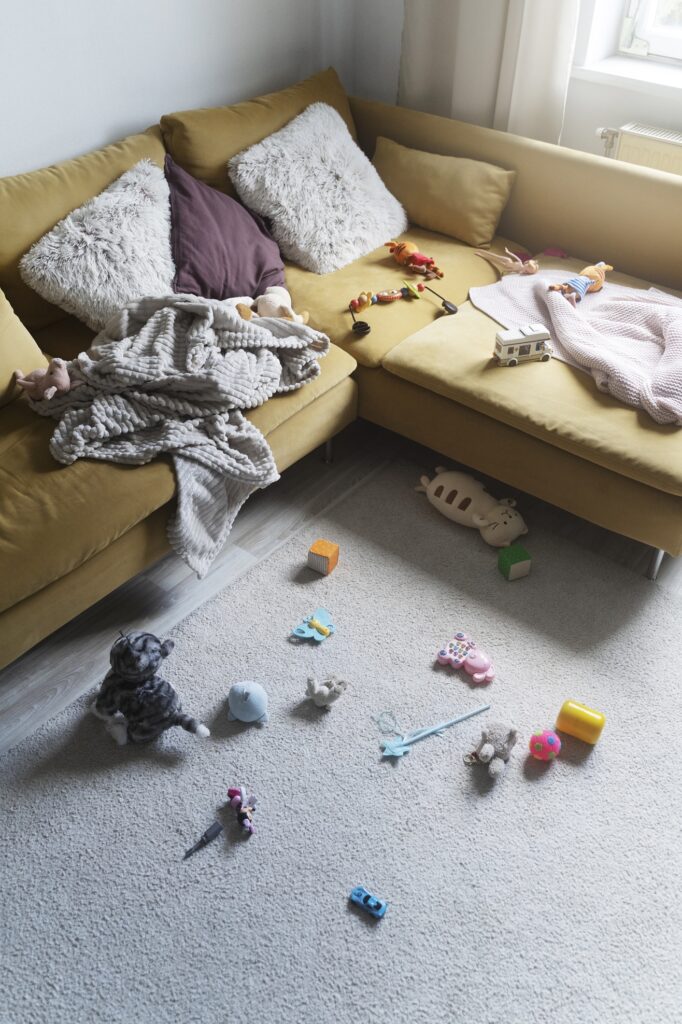
For me, decluttering is not about creating a perfect Instagram home. It’s about creating a functional home that works for my family. The German method helps remove emotional pressure from consumption. Instead of asking: Do I need this to belong? Do I need this because it’s trendy?
You start asking much more powerful questions: Does my life actually require this? Does this item support my daily routines? Or is it just another thing that needs to be stored, cleaned, and maintained?
If an item requires more energy, money, or attention than the value it provides, then it becomes a burden. And burdens should not live in your home.
The Kitchen: Where Function Usually Wins
In the kitchen, decluttering usually looks different.mFood almost always has a function – it feeds you. But occasionally you find items that clearly lost their purpose. For example, a piece of bread that became hard as a rock. Or yeast that no longer works because it wasn’t stored properly. Those items are easy to declutter.
Another helpful trick is to move older foods to the front of the counter. If something has been sitting in the cabinet for months but is still edible, placing it in a visible spot increases the chance that it will actually be used. This reduces food waste and respects the resources that went into producing the food.
The Cabinet of Shame: Tupperware Chaos
Every household has one. The infamous Tupperware cabinet. Lids without containers. Containers without lids. Random plastic boxes that somehow multiply. When a container no longer has a matching lid, it usually loses its function. And when something has no function, it is a clear candidate for decluttering. Sometimes a container can be repurposed for crafts, kids’ activities, or storage. But if there is no realistic use left, it can go.
Decluttering Children’s Items
Children’s rooms can be a surprising source of clutter. Broken toys, unused books, or small plastic items that nobody remembers anymore. When something is broken and cannot realistically be repaired, it automatically fails the function test. Those items can leave immediately. Kids also grow quickly, which means clothes and toys constantly become too small or irrelevant. Regular small decluttering sessions help prevent those items from slowly taking over the house.
The Strongest German Rule: The Category No-Buy
Decluttering alone doesn’t solve clutter problems. If you continue buying new things, clutter simply returns. That’s why the German method includes a very powerful rule after decluttering. The Category No-Buy Rule. This means choosing one category where you temporarily stop buying new items.
For example: Clothing. Craft materials. Kitchen gadgets. Beauty products.
The rule is simple. You are not allowed to buy anything new in that category until you have used everything you already own in this exact category.
My Clothing No-Buy Challenge
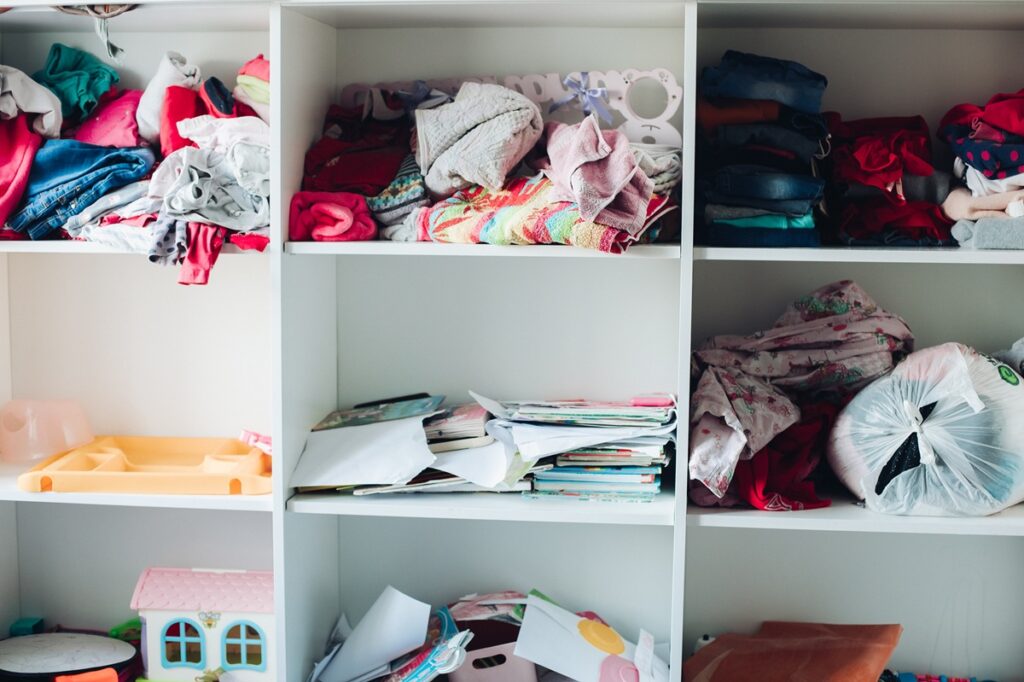
Right now my no-buy category is clothing. I divided my wardrobe into two sections. Clothes I have already worn this season. Clothes I have not worn yet.
Before I am allowed to buy anything new, I must wear every single item in my wardrobe.
This forces creativity. Instead of buying new clothes, I experiment with new combinations. I watch styling videos. I learn how to get more out of what I already own. Financial freedom rarely starts by earning more money. It starts by fully using what you already have.
One Emotional Rule for Clothing
Even though the German decluttering method is very rational, there is one emotional rule I apply to clothing. If I wear an item and feel uncomfortable twice while wearing it, I declutter it.
Clothes should never make you feel uncomfortable. Your wardrobe should support you, not stress you.
The Results of My Decluttering Session
At the end of this decluttering session, I counted everything that went into the box. In total, I decluttered 37 items. I originally aimed for 50, but I’m still very happy with the result. Even a small number of removed items can create noticeable space in cabinets and drawers. Decluttering is not about dramatic transformations. It’s about gradual improvement.
The Three Core Questions of the German Method
To summarize, the German Decluttering Method is based on three key questions.
- Does this item currently have a useful function in my life?
- If not, can I realistically repurpose it?
- Does this item make my life easier, more efficient, or more functional?
If the answer to all three questions is no, the item can go.
And after decluttering, the final step is the category no-buy challenge.
Why This Method Works
This method sits perfectly between minimalism and frugalism.
It helps you reduce clutter without wasting useful resources. It saves money. It frees up space. And it creates a home that actually works for your daily life. It might not produce a perfectly aesthetic home that looks like a magazine. But it will create something far more valuable. A home that supports your life instead of complicating it.
Download my FREE 5-Page MoneyMalism Planner Bundle (usually 49,99€!) now – designed to help you declutter your mind, organize your finances, and move boldly towards financial freedom.
Minimal effort. Maximum clarity.
Grab your free planners here!
moneymalism.de – Become a moneymalist. Explore real freedom.





 Easy to use – just print it out and go!