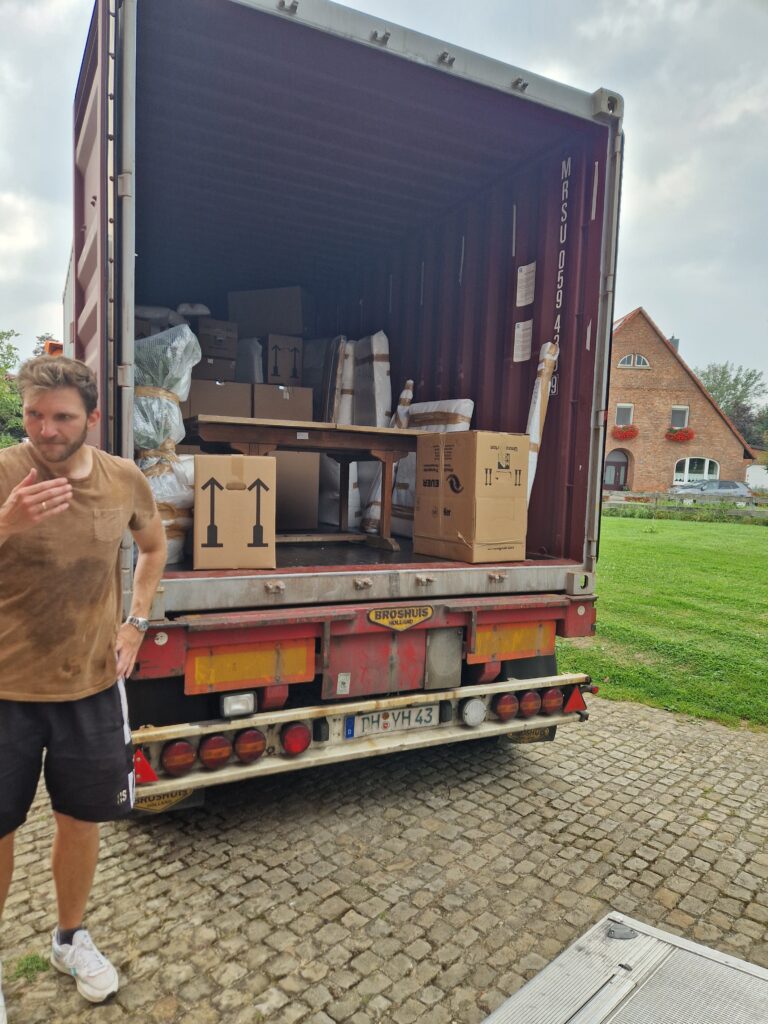
Imagine being raised in northern Germany, where you are taught to reuse your aluminum foil, and then moving to a country where it is normal to have seven credit cards and go shopping much more often than we would in northern Germany. That is what happened to me one and a half years ago. We moved from northern Germany to the southern United States. And while I absolutely love it here, some money habits still make my inner German accountant sit up very, very straight.
I have to admit, the first time I saw somebody here using paper plates in their own home, not for a party, not for a big gathering, just for a simple breakfast…. a little part of my northern German soul left my body.
As I already said, we absolutely love it here. This is not about bashing the United States. It is more about comparing what makes our cultures different and the money culture shocks I experienced moving here as a northern German. We simply handle things differently. Northern Germans are known for being – I would not say stingy – but very intentional with money. We like saving, and we like seeing our money sitting safely in our bank accounts.
So let’s talk about the obstacles I faced while adjusting to life in the United States and how I managed to stay frugal and minimalistic in an environment where spending money is incredibly easy. I think we can all agree that the US practically invented marketing. It is very easy to spend a lot of money here.
If you are interested in my German frugal lifestyle and how I save money, let’s dive into my experiences. I am also sharing my grandma’s and grandpa’s tips for living as frugally as possible. If this sounds like something for you, feel free to follow along and share your experiences. If you have ever been to the US or live here, I would love to hear what differences you noticed compared to your home country.
Everything I say will sound very general. I live in the south, so my experience is mostly based on that region. I have traveled to many states, but I have only lived here. It is a huge country, and things may be different elsewhere.
The first big shock for me was sales tax. In stores, the tax is added at the register and is not included in the displayed price. You think you are getting tomatoes for two dollars, and suddenly at checkout they cost more. You never fully know your final total, and it still feels strange.
Dining out adds another surprise. Tipping culture is very strong. You are not forced, but it is clearly expected that you leave a generous tip of 15 to even 22 percent. Larger groups often have gratuity automatically added. So that fifteen-dollar pizza easily becomes twenty dollars.
As a German, this confused me at first. Restaurants even display reminders that servers do not work for free. My German brain immediately thinks employers should be responsible for paying their staff fairly. In Germany, we tip for good service. Here, tipping feels expected regardless. I do tip, of course, but culturally it still feels unfamiliar.
Another shock was credit cards and debt. Since moving here, I have received countless pre-approved credit card offers through mail, email, and phone calls. Different cards promise rewards for gas, dining, or shopping, and it gets confusing quickly.
We have a credit card because it is almost unavoidable here. What surprised me is how normalized consumer debt is. You can finance almost anything, even groceries. I have talked to people who casually carry thousands in credit card balances without fully realizing the long-term consequences. It feels like financial decisions are sometimes made more casually than what I grew up with.
Next is air conditioning and heating. I truly love central AC. It is convenient in a way German homes often are not. But I notice that, especially in the southern states, people tend to run their AC very cold in summer and very warm in winter.
My German upbringing was different. Turn off lights. Wear a sweater indoors. Do not waste energy. For us, comfort means moderation. We set warmer temperatures in summer and cooler ones in winter. It saves money and energy. Some households spend over 300 dollars a month on utilities, while ours is closer to 80. That difference adds up.
Gas prices, on the other hand, feel incredibly low compared to Germany. Road trips are affordable here, which is something we really enjoy. Car insurance was a completely different story. As newcomers without a US driving history, quotes were extremely high. It was a financial shock until we found a workable solution.

Childcare costs were one of the biggest surprises. In Germany, we paid a few hundred euros per month for full-time daycare. Here, sending both of our children to daycare cost about 2,600 dollars monthly. Employer support helped, but it explains why many parents stay home or juggle schedules.
There are pros and cons. Because childcare operates more like a business, availability and reliability are often strong. But the financial burden is significant.
Healthcare was another topic I was curious about. German media often portrays the US system as extremely harsh, and some of that is true. I know people carrying serious medical debt, including large bills related to childbirth.
At the same time, the system is efficient and highly digital. Appointments, communication, and results are streamlined. Germany offers universal access but struggles with overcrowding. The US system feels faster but more expensive. It is a trade-off.
Salaries here often feel higher depending on the field. There is more earning potential, but there is also greater risk. Income differences seem wider. You can climb higher financially, but falling behind can also happen faster.
Social spending culture feels different too. I once brought what I thought was a generous baby shower gift, only to realize others were gifting much more. It is generous and kind, but it can create pressure to spend more than you are used to.
Living here has made me more aware of my cultural roots. Many frugal habits I resisted as a child now feel like quiet strengths. Yes, life here is more expensive and we spend more. But I also feel more connected to my minimalist values because I see overconsumption more clearly.

Both cultures have wisdom. Germany teaches restraint and sustainability. The US encourages opportunity and convenience. Somewhere in between is a balance that works for me.
If you have ever experienced money culture shock in any country, you know how eye-opening it can be. It makes you reflect on what you value and how you handle money.
And if you want more insights into frugal, minimalistic living from a German perspective, along with my grandparents’ practical tips, I would love for you to follow along. See you in the next one.
If you want more ideas to save money, subscribe to my channels and grab your free planner bundle!
Download my FREE 5-Page MoneyMalism Planner Bundle (usually 49,99€!) now – designed to help you declutter your mind, organize your finances, and move boldly towards financial freedom.
Minimal effort. Maximum clarity.
Grab your free planners here!
moneymalism.de – Become a moneymalist. Explore real freedom.